Rattan & Natural Fiber Materials in the Poland Market
Poland’s demand for rattan materials is driven by one of the most remarkable manufacturing growth stories in European industry — the country’s rise over two decades to become one of the EU’s largest furniture exporters, producing cost-competitive furniture for German, French, Scandinavian, and British retail buyers at a scale that makes it a strategically important natural fiber materials market within the EU supply chain. Natural fiber materials Poland’s furniture manufacturers and contract production facilities source are inputs for EU-distributed furniture programs, not merely domestic consumption — and the consistency, documentation, and supply reliability requirements of that manufacturing context define what the Polish market demands from its international natural woven material suppliers.
Natural Fiber Materials in Poland – An EU Manufacturing Powerhouse
Poland is not primarily a design-led or lifestyle-driven natural materials market. It is a production-driven EU manufacturing hub whose demand for rattan materials Poland’s furniture sector generates is shaped by the output requirements of factories supplying Western European retail buyers. As a member of the EU single market, Poland benefits from frictionless distribution to Germany, France, the Benelux countries, and Scandinavia — and its furniture manufacturers have leveraged that access to build large-scale OEM and contract production operations that produce furniture across the mid-market to premium price range for international brands.
EU furniture production Poland’s manufacturing clusters generate creates consistent, structured demand for natural woven material inputs — cane webbing panels, rattan core, and rattan mat materials that are incorporated into chair, bedroom, and cabinet furniture designs specified by Western European retail clients.
Core Industries Driving Rattan Materials Demand in Poland
Furniture Manufacturing for EU Export
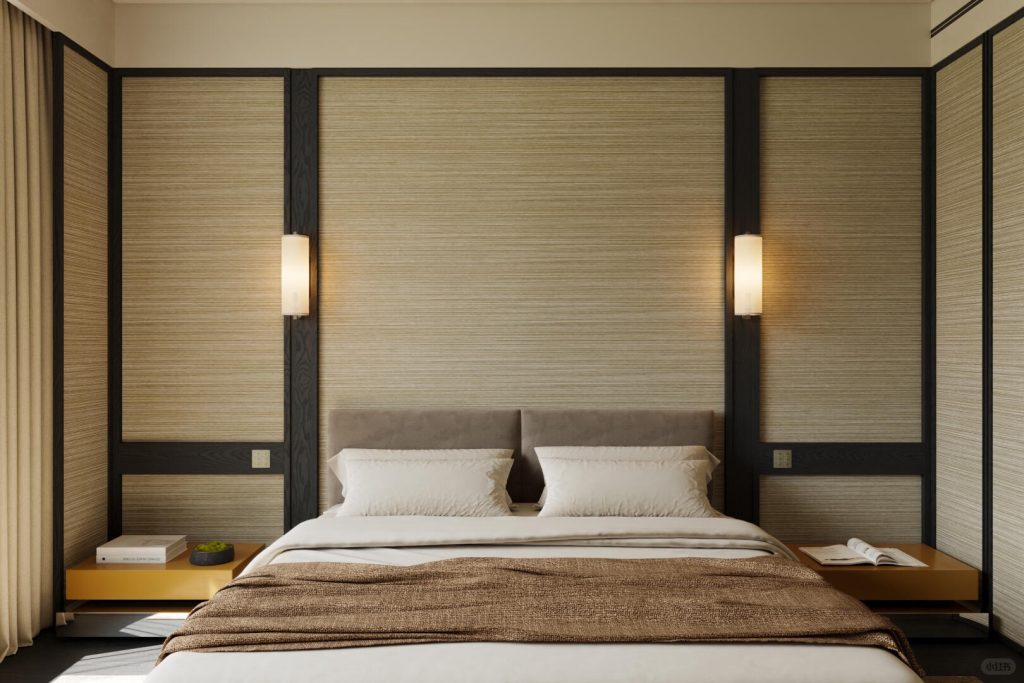
Furniture manufacturing Poland’s production economy has built into a strategically significant EU industry sector is the dominant demand channel for rattan materials Poland’s professional market generates. Production clusters in Poznań, Wrocław, Łódź, and the Warsaw region manufacture cane-backed dining chairs, bedroom furniture with woven panel headboards, wardrobe door panels with cane inserts, and decorative cabinet furniture for export to German retailers, French furniture brands, Scandinavian interior chains, and UK contract suppliers. The cane webbing Poland market’s manufacturing sector sources must meet the specification standards of Western European retail buyers who approve materials upstream in the product development process — consistent weave density, controlled moisture content, and stable dimensional accuracy across production runs are baseline requirements, not quality premiums.
Contract Furniture & Retail Supply
Polish factories operating as OEM and contract manufacturers for European interior brands and retail chains produce furniture across Scandinavian-influenced minimalist, contemporary European, and mid-market residential styles — all of which incorporate natural woven materials as decorative and functional panel elements. Wholesale cane webbing Poland’s contract manufacturing sector sources for these programs must be available in standardised sheet and roll dimensions that align with European furniture production specifications, and it must perform consistently across the production volumes that large retail supply contracts require.
Residential Renovation & DIY Market
Poland’s growing urban middle class — concentrated in Warsaw, Kraków, Wrocław, and Poznań — is generating rising domestic demand for natural fiber materials Poland’s residential interior market specifies for apartment renovation projects. Scandinavian-influenced interior aesthetics, widely adopted in Polish urban residential design through the influence of IKEA and European interior media, create demand for cane webbing cabinet inserts, natural woven accent panels, and rattan furniture material Poland’s DIY and renovation retail channels supply to homeowners upgrading kitchens, bedrooms, and living rooms with natural material details.
Hospitality & Boutique Hotel Growth
Poland’s boutique hotel, urban business hotel, and countryside resort sector — smaller in scale than the Gulf or Southeast Asian hospitality markets but growing steadily — generates demand for rattan furniture material Poland’s hospitality interior designers source for lobby furniture, guestroom headboard panels, and decorative feature wall applications. Poland’s countryside lodge and agritourism sector also contributes to natural material demand, particularly for rattan mat wall panels and cane webbing seating in properties seeking a warm, craft-referenced interior aesthetic.
Natural Fiber Material Applications in Polish Furniture & Interiors

Rattan materials Poland’s manufacturing, renovation, and hospitality sectors incorporate serve distinct production and design roles:
Cane Webbing
- Dining chair backs and seats — the primary cane webbing Poland market application in export furniture manufacturing, produced for Western European retail and contract buyers
- Wardrobe and bedroom furniture panels — incorporated as door inserts and headboard facing materials in bedroom furniture programs exported across the EU
- Cabinet door inserts — used in kitchen, living room, and storage furniture designed for mid-market and premium European retail channels
Rattan Core
- Frame binding and reinforcement — used in Polish furniture factories for chair arm, leg, and frame finishing as both structural and decorative detail
- Decorative edging on export furniture — applied to furniture frames produced for European retail buyers who specify natural material detailing as a design feature
Rattan Mats
- Interior feature panels — flat woven rattan panels used in residential renovation and boutique hospitality interior applications across Polish urban markets
- Wall cladding in countryside hospitality — specified in agritourism and lodge properties for natural material warmth and textural authenticity
Grasscloth Wallpaper
- Boutique hospitality interiors — specified in Polish boutique hotels and upscale restaurant interiors for natural wall texture that signals premium positioning
- Contemporary residential design — used by Warsaw and Kraków interior designers in high-specification apartment renovation projects as natural wall covering alternatives
Design Trends & Aesthetic Context for Natural Materials in Poland
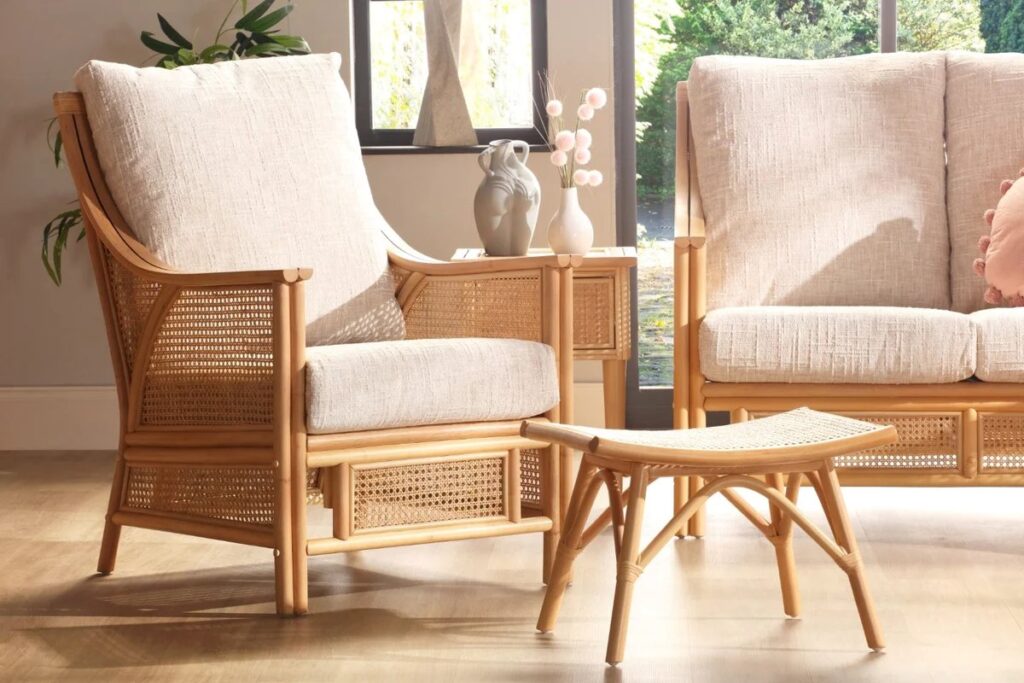
Poland’s interior design aesthetic is shaped by strong Scandinavian minimalism influence — the dominant style reference for Poland’s urban residential and mid-market furniture production — combined with the functional precision of German design thinking and the growing adoption of natural material textures as warmth-introducing elements within otherwise clean-lined, pale-toned interior schemes. Rattan furniture material Poland’s design and manufacturing sectors work with operates in this context as a natural texture element that warms Scandinavian-influenced schemes and adds material authenticity to furniture production programs targeting European buyers who specify natural material panels as part of their product design requirements.
Unlike France’s decorative elegance or Germany’s engineering-led material selection, Poland’s natural material adoption is fundamentally production-practical: natural woven materials are specified because Western European retail buyers require them in product designs, because they deliver the warm natural texture that Scandinavian-influenced interiors need, and because they are cost-appropriate for mid-market furniture production programs. Natural fiber materials Poland’s furniture and interior sectors increasingly adopt also benefit from growing EU sustainability consciousness — natural, renewable, plant-based materials align with the eco-positioning that European retail buyers and Polish domestic consumers increasingly reward.
Regional Demand Clusters Across Poland
Poznań — Primary Furniture Production Hub
Poznań is Poland’s most significant furniture manufacturing cluster, concentrating the highest density of export-oriented furniture producers whose demand for furniture manufacturing Poland’s Poznań region generates is among the most consistent and volume-significant in the country. The city’s large-scale furniture factories supply major European retail clients and require stable, documented natural woven material supply chains aligned with European production schedules.
Wrocław — Industrial & Manufacturing Zone
Wrocław’s growing industrial manufacturing base includes furniture and interior component producers serving the EU market. EU furniture production Poland’s Wrocław region generates benefits from the city’s strong logistics infrastructure and proximity to the German border — enabling efficient supply chain management for natural fiber materials sourced internationally and distributed to production facilities.
Warsaw — Commercial & Residential Development
Warsaw’s concentration of corporate headquarters, luxury residential development, and Poland’s most active boutique hospitality market generates specification-level demand for natural fiber materials Poland’s capital city design community sources for premium interior and commercial fit-out projects. The city’s independent interior design studios and high-end residential renovation sector contribute consistent demand for wholesale cane webbing Poland’s Warsaw design market specifies for cabinet and furniture applications.
Łódź — Growing Production Cluster
Łódź’s expanding furniture and interior production sector represents an emerging demand cluster for rattan materials Poland’s industrial geography is developing outside its established Poznań and Wrocław centres. The city’s cost-competitive manufacturing environment and growing logistics infrastructure make it an increasingly relevant sourcing destination for natural woven material supply.
EU Trade, Compliance & Distribution – Poland’s Strategic Position
Poland’s EU membership gives its furniture manufacturing sector frictionless access to the European single market — a structural advantage that makes Polish-manufactured furniture cost-competitive in Germany, France, the Benelux, and Scandinavia without the customs friction that non-EU manufacturers face. For international natural fiber material suppliers, this means that materials entering Poland through Gdańsk or Poznań logistics hubs feed into a manufacturing network whose finished goods move freely across the EU.
EU import documentation requirements for natural plant-based materials — phytosanitary certification, certificates of origin, HS code compliance — apply at the point of entry into Poland and must be managed to EU standard. Polish furniture manufacturers operating under European retail buyer quality frameworks also expect their material suppliers to maintain consistent quality documentation across shipments, a requirement that mirrors the German compliance expectations of the buyers their furniture ultimately serves.
Sustainability & EU Market Expectations for Natural Materials in Poland

Poland’s furniture manufacturing sector operates within the EU’s increasingly demanding sustainability regulatory environment — one that is shaping procurement decisions upstream and downstream of the manufacturing stage. European retail buyers sourcing furniture from Polish OEM manufacturers are requiring natural, renewable material credentials as part of product compliance, and Polish furniture producers are passing those requirements to their material suppliers.
Natural fiber materials Poland’s furniture sector sources — rattan, cane, and bamboo — carry genuine renewable material credentials: plant-based, biodegradable, and produced without the synthetic chemical content that EU sustainability frameworks increasingly restrict. For Polish manufacturers seeking to align their EU-distributed furniture programs with green product positioning, natural woven materials provide both the material performance and the verifiable sustainability credentials that European retail certification schemes recognise.
Why Consistent International Supply Matters for Polish Manufacturers
For Poland’s export furniture manufacturers, the consistency of natural woven material inputs is a production-schedule and buyer-relationship issue with direct commercial consequences. Cane webbing Poland market production facilities incorporate into EU-distributed furniture must match the material specifications approved by Western European retail buyers upstream in the product development process — batch deviation in weave density or surface quality generates buyer rejection risk that affects ongoing supply contracts. Long-term supply partnerships with international natural material suppliers who can maintain consistent quality across multiple shipments and document that consistency to EU compliance standards are the sourcing relationships Polish furniture manufacturers actively seek and retain.
For Polish buyers exploring consistent natural fiber material supply:
- Wholesale Rattan Cane Webbing — furniture-grade cane webbing for EU export chair and cabinet production
- Wholesale Rattan Core — diameter-sorted binding material for furniture frame finishing in Polish production facilities
- Wholesale Rattan Mats — flat woven panels for residential renovation and boutique hospitality applications
- Wholesale Grasscloth Wallpaper — commercial-grade natural fiber wallpaper for boutique hospitality and premium residential projects
Supporting Poland’s Furniture & Manufacturing Industry
Poland’s demand for rattan materials Poland’s manufacturing and interior sectors source — anchored in one of the EU’s most dynamic furniture manufacturing sectors and supported by a growing domestic residential renovation market — represents a sourcing environment where supply consistency, EU compliance documentation, and long-term production partnership reliability are the primary criteria for natural woven material supply relationships. Natural fiber materials Poland’s manufacturers source feed directly into Western European furniture supply chains, making material quality a competitive factor with implications far beyond the Polish domestic market.