In the contemporary architectural landscape, materials are no longer just functional components; they are the primary storytellers of a space. Cane webbing interior design has transcended its traditional furniture roots to become a versatile architectural medium, favored by world-class designers for its ability to soften rigid structures and introduce organic warmth. Whether utilized in the grand lobbies of the Marriott or the serene, eco-conscious spaces of the Namia River Retreat, rattan webbing serves as a bridge between the natural world and the built environment. At Vilata, we provide the technical-grade rattan required to execute these large-scale architectural visions, ensuring that every installation meets the highest standards of international luxury.
Tropical Modernism and the Revival of Natural Textures
The resurgence of rattan in professional interior design is deeply tied to the “Tropical Modernism” movement. This design language seeks to combine the clean lines of modern architecture with the local, sustainable materials of the tropics. Cane webbing interior design is the centerpiece of this aesthetic. By incorporating woven textures into wall panels, ceilings, and dividers, architects can create spaces that feel expansive yet intimate.
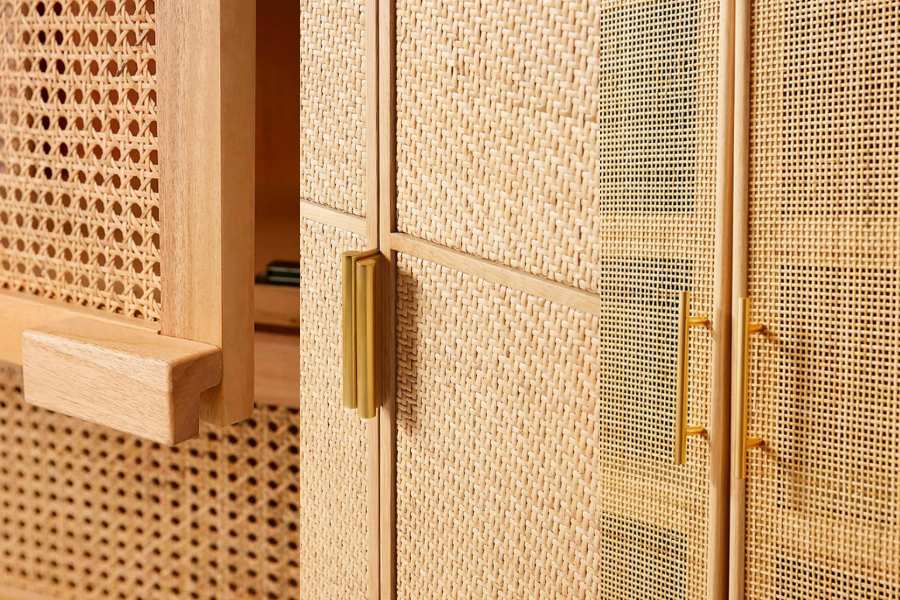
In projects like the Royal Island Golf & Villa, the use of rattan webbing across large surface areas provides a cohesive visual rhythm. The material’s ability to filter light and permit airflow makes it ideal for creating “breathing” environments where the boundaries between indoor and outdoor living are blurred. This tactile quality is a major draw for B2B clients in the hospitality sector who wish to offer guests a sensory experience that is both sophisticated and grounded in nature.
Architectural Applications: From Ceiling Inlays to Custom Partitions
The versatility of Vilata’s roll widths—ranging from 45cm to 90cm—has allowed architects to push the boundaries of how rattan is applied in interior spaces.
Rattan Ceiling Panels
One of the most dramatic applications of cane webbing interior design is the woven ceiling. By using wide-format 90cm rolls, designers can create coffered ceiling inlays that absorb sound and add immense visual depth. In luxury resort lobbies, these rattan ceilings act as a natural acoustic treatment, dampening noise while providing a warm, golden glow when paired with integrated lighting.
Spatial Dividers and Partitions

Rattan partitions offer a unique solution for “zoning” a space without the use of heavy, opaque walls. In open-plan hotel suites or boutique restaurants at the Marriott, rattan screens allow light to pass through while maintaining guest privacy. The semi-transparent nature of the weave creates a “layered” effect in a room, a technique often used by top-tier architects to make large spaces feel more manageable and intricately detailed.
Integrating Rattan with Modern Lighting and Materials
A hallmark of high-end cane webbing interior design is the juxtaposition of rattan with contrasting materials such as marble, brass, or glass.
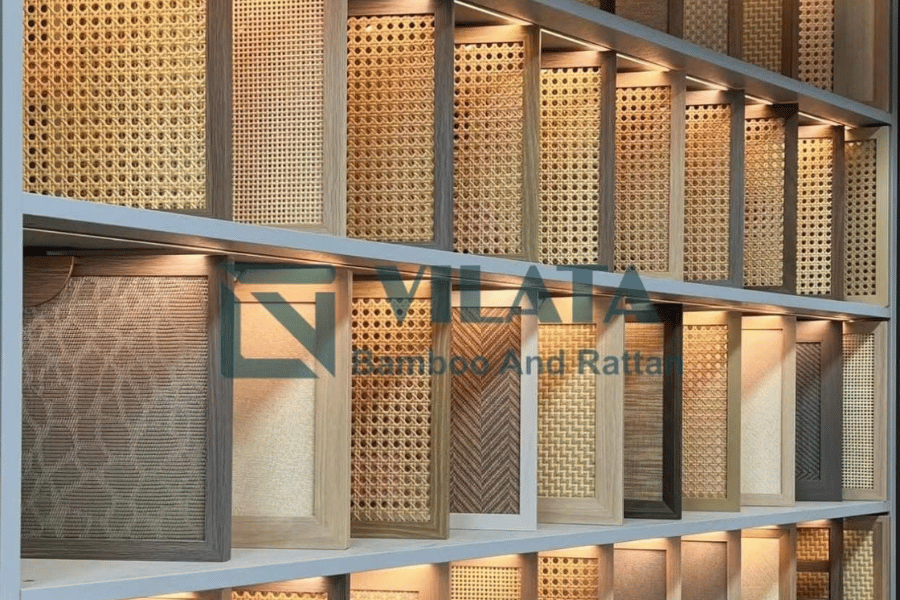
- Backlit Rattan: When rattan panels are backlit with warm LED strips, the weave pattern becomes a glowing geometric art piece. This technique is frequently used in feature walls and bar fronts to create an inviting evening ambiance.
- Material Fusion: Pairing the organic texture of Vilata’s rattan with the cold, smooth surface of natural stone creates a balanced sensory experience. Architects for projects like Namia River Retreat often use this contrast to emphasize the “raw luxury” of the environment.
Technical Excellence and Export Standards for Architectural Grade Rattan
Executing architectural features requires a level of material consistency that generic suppliers cannot provide. At Vilata, our post-arrival quality control is designed to support these complex installations.
For large-scale architectural orders, our QC process includes:
- Linear Alignment Check: Ensuring the weave remains perfectly straight over 15-meter rolls, which is essential for wall cladding where patterns must align across multiple panels.
- Tonal Consistency: Sorting material into “Master Batches” so that a 200-square-meter ceiling remains uniform in color.
- Compliance Documentation: Providing the Certificate of Origin (CO) and Certificate of Quality (CQ) required for major construction projects. These documents ensure the material meets fire-retardant requirements (when treated) and sustainability standards for green-certified buildings.
Durability and Maintenance in High-Traffic Commercial Interiors
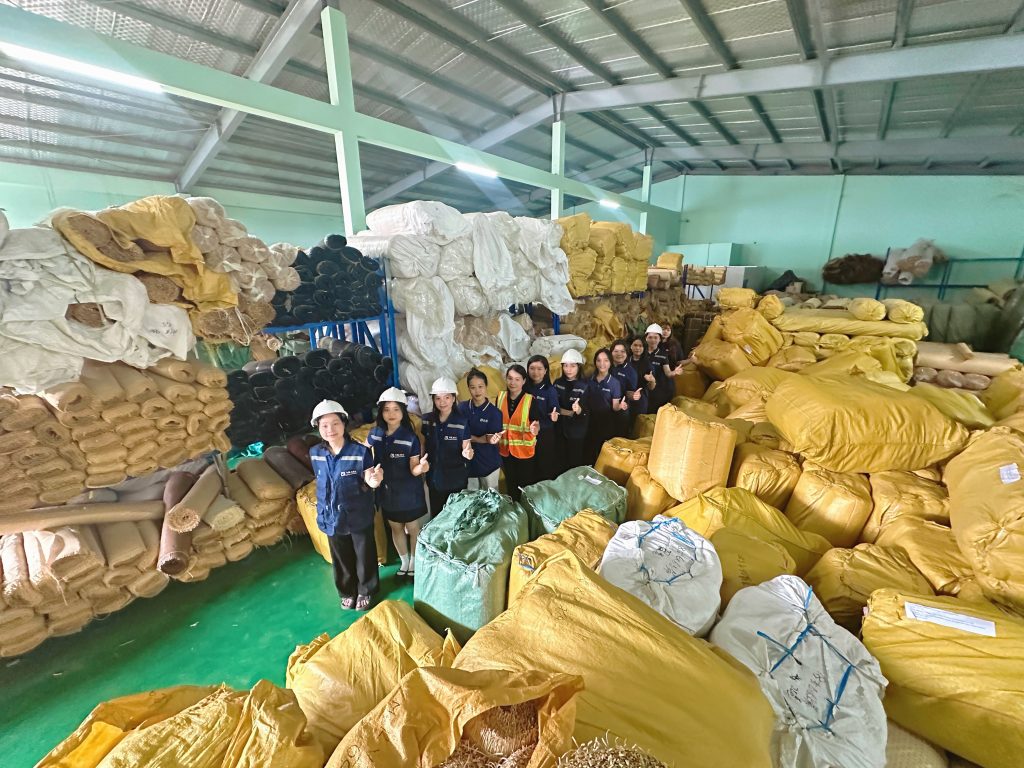
For B2B clients, the beauty of cane webbing interior design must be matched by its performance. Rattan is naturally resilient, but its longevity in a commercial setting depends on the quality of the fiber. Vilata sources only mature rattan skin with a high silica content, making our webbing naturally resistant to the minor impacts and abrasions common in public spaces.
Maintenance for architectural rattan is remarkably low-effort. Regular dusting and an occasional moisture-balance check in air-conditioned environments ensure the material stays flexible and vibrant. For projects in high-humidity coastal areas, like Namia River, the natural mold resistance of our professionally treated rattan provides peace of mind for facility managers and developers alike.
Case Study: Defining Luxury at Namia River Retreat
The Namia River Retreat serves as a perfect case study for the power of rattan in interior design. In this project, rattan was not an afterthought but a primary architectural element. By utilizing Vilata’s specialized widths to create custom headboards, ventilated wardrobe doors, and decorative wall inserts, the designers achieved a seamless look that felt deeply connected to the local Vietnamese craft heritage. The success of this project illustrates why world-class interior firms rely on Vilata for the precision and quality needed to execute complex, high-stakes designs.
Conclusion: Shaping the Future of Sustainable Interiors
Cane webbing interior design represents a shift toward a more thoughtful, textured, and sustainable future for our living and working spaces. It is a material that offers a unique connection to the natural world while meeting the rigorous technical demands of modern architecture. As global hospitality leaders like the Marriott continue to embrace organic luxury, Vilata remains at the forefront, providing the premium materials, technical documentation, and project-proven expertise required to turn visionary concepts into enduring realities. Through our commitment to quality and sustainability, we are proud to support the architects and designers who are crafting the next generation of beautiful, breathable, and meaningful interiors.