In the global landscape of luxury hospitality and high-end furniture manufacturing, the efficiency of a supply chain often rests on the precision of material specifications. For professionals working on iconic developments such as the Marriott or the Namia River Retreat, the transition from bulk rolls to specific cane webbing sheet sizes represents a significant leap in production optimization. Choosing the right sheet format is not merely a matter of convenience; it is a calculated engineering decision that affects labor costs, material yield, and the final aesthetic integrity of the interior space. At Vilata, we provide the technical expertise to help B2B partners navigate these dimensions to achieve a perfect balance between organic beauty and industrial precision.
The Distinction Between Bulk Rolls and Precision Cut Sheets
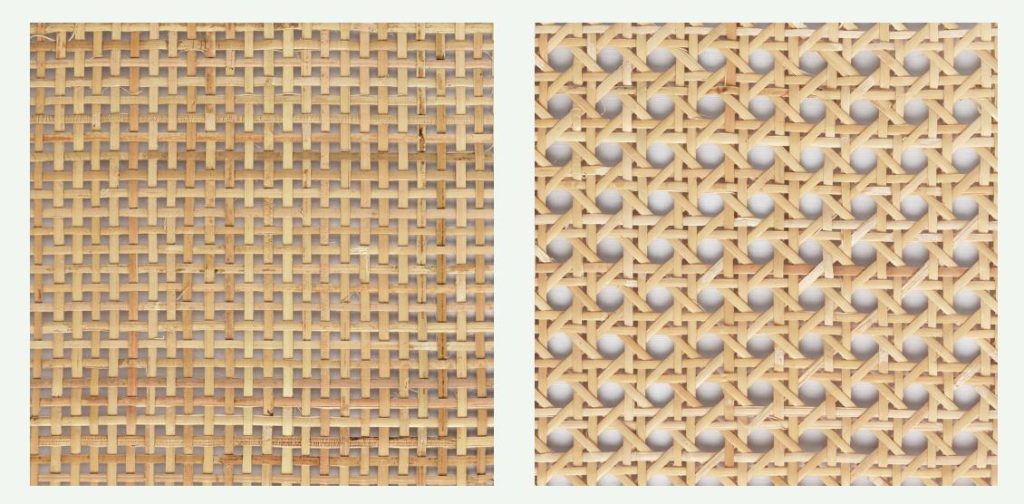
To understand the value of specific sheet sizes, one must first distinguish between raw material and production-ready components. While master rolls provide a versatile inventory for a factory, pre-dimensioned cane webbing sheets offer a “plug-and-play” solution for specific furniture lines. In the fast-paced environment of a furniture assembly plant, the time spent measuring, unrolling, and manually cutting from a 15-meter roll can lead to inconsistencies and significant man-hour costs. By sourcing sheets that are already aligned with the standard widths of 45cm to 90cm, manufacturers can streamline their workflow, ensuring that every panel arrives at the assembly station with clean edges and accurate dimensions.
Analyzing Standard Industry Cane Webbing Sheet Sizes Dimensions for Hospitality Furniture
The interior design industry has evolved around several standard sheet sizes that align with the ergonomics of modern furniture. At Vilata, we have optimized our inventory to support these trends, providing a range of widths that serve as the foundation for diverse design applications.
The Functional Utility of Small Format Sheets
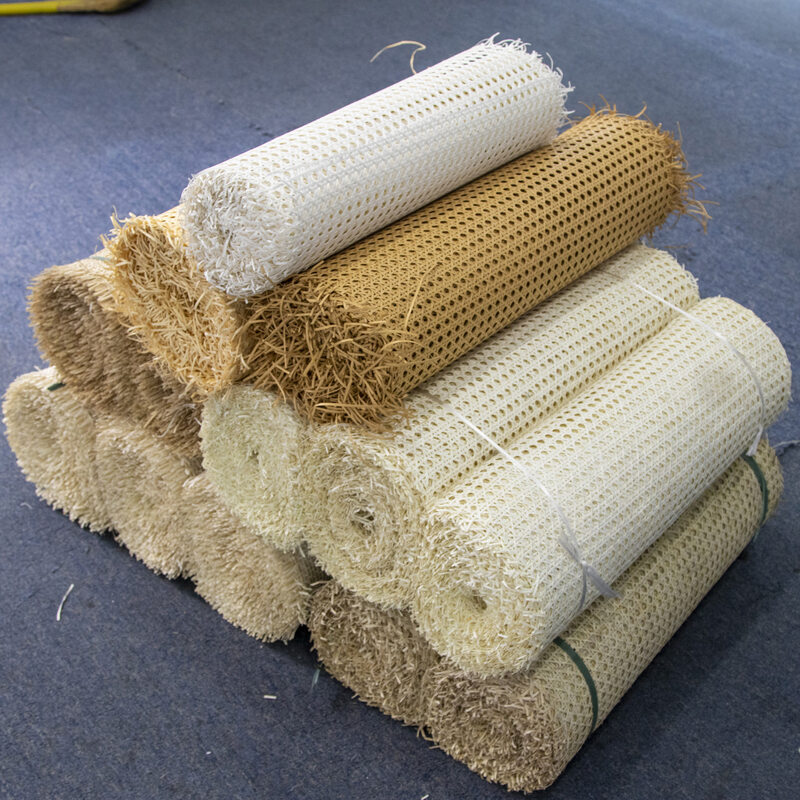
Smaller sheets, typically in the 45cm and 50cm width range, are the cornerstone of dining chair production. In the context of the Royal Island Golf & Villa project, where hundreds of seating units were required, the use of standardized 45cm sheets allowed for a rapid assembly process. These sizes are engineered to fit the average seat pan of a commercial-grade chair, providing enough material for a secure spline-and-groove attachment while maintaining the structural tension required for high-traffic environments.
Medium Sheets for Cabinetry and Credenzas
The 60cm and 70cm widths represent the “sweet spot” for case goods. These sheets are perfectly proportioned for the door panels of hotel sideboards and bedroom dressers. When a manufacturer orders these specific rattan cane sheet sizes, they are effectively purchasing a component that is ready for the framing stage. This is particularly crucial for B2B clients who manage tight project timelines, as it eliminates the bottleneck of raw material preparation and reduces the physical footprint required for material storage on the factory floor.
Large Format Sheets for Architectural Statements
For more ambitious designs, such as full-height wardrobe doors or textured wall partitions, the 80cm and 90cm sheets are the preferred choice. These large-format sheets allow architects to maintain a continuous weave pattern across expansive surfaces. In luxury resort settings, where the visual “flow” of natural materials is a key part of the brand experience, avoiding seams is paramount. Our ability to supply these wider sheets ensures that even the most grand-scale interior features remain cohesive and visually stunning.
The Economic Impact of Yield Optimization and Custom Cutting
One of the most significant advantages of a specialized supplier like Vilata is our ability to provide custom sizes tailored to a specific cutting list. For our international B2B partners, yield optimization is a mathematical necessity. If a designer specifies a panel that is 38cm wide, using a standard 90cm sheet allows for a “two-up” cut with almost zero waste. However, if the design is not aligned with the available sheet widths, wastage can climb to 20% or more.
Our technical team works closely with procurement officers to analyze their furniture blueprints. By matching the design to our available widths (45, 50, 60, 70, 80, 90cm), we help clients achieve maximum material utilization. This precision is backed by our Certificate of Quality (CQ) and Certificate of Origin (CO), ensuring that every custom-cut sheet meets the rigorous standards required for international export and high-end installation.
Quality Control Rigor for Export Grade Rattan Sheets

When material is destined for a project like the Marriott, the quality control process must be exhaustive. A single sheet with a color variance or a broken fiber can ruin the symmetry of a premium furniture set. Our post-arrival processing includes a multi-stage inspection that guarantees every sheet meets the Vilata standard:
- Color Uniformity Mapping: We sort our sheets into tonal batches to ensure that all panels for a single project share a harmonious color profile.
- Fiber Integrity and Smoothness: Each sheet is manually checked for burrs or snags, ensuring a smooth surface that is safe for hospitality guests.
- Moisture Content Regulation: We maintain our sheets at a moisture level of 12-15%, which is critical for dimensional stability during sea freight and final installation.
- Verification of Quantity and Specifications: We ensure that the count and dimensions of the sheets perfectly match the client’s requirements, preventing any delays in the production schedule.
Technical Considerations for Professional Installation
The physical dimensions of a cane webbing sheet are dynamic rather than static. Because rattan is an organic fiber, it must be handled with an understanding of its botanical properties. For a professional-grade finish, the sheets must be hydrated before they are applied to a frame. This process of immersion in water allows the fibers to become pliable and slightly expand in size.
When the sheet is installed while damp and allowed to dry in a controlled environment, it contracts, pulling itself tight across the frame. This “natural tensioning” is what provides the drum-like durability found in high-end furniture. Without this step, even the highest quality sheet will eventually sag, compromising the aesthetic and functional value of the piece. This technical nuance is a standard part of the training we offer to our B2B partners to ensure their final products reflect the quality of the materials supplied by Vilata.
Documentation and Global Compliance for International Trade
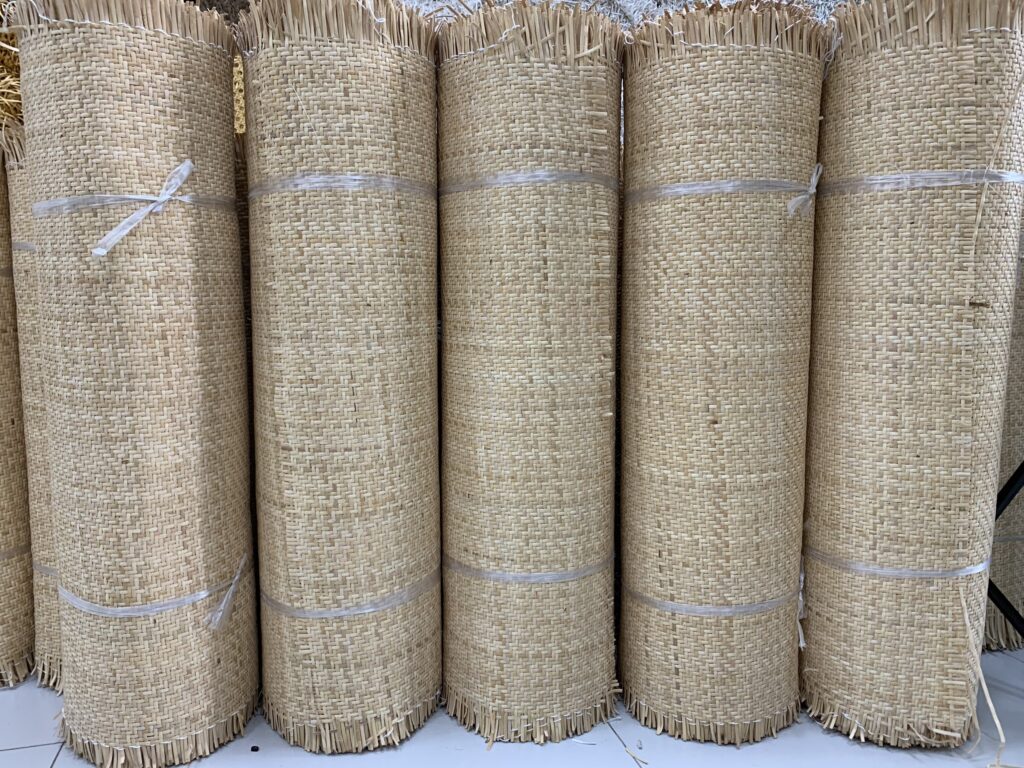
Shipping natural materials across international borders requires a high level of administrative expertise. For every order of cane webbing sheets, Vilata provides comprehensive documentation to facilitate a smooth transit process.
- Certificate of Origin (CO): Essential for verifying the source of the material and navigating trade tariffs.
- Certificate of Quality (CQ): A guarantee to the client that the sheets have been inspected and meet the agreed-upon technical specifications.
By providing these documents, we allow our clients to focus on their manufacturing and design goals, knowing that the logistics and compliance are handled with professional care.
Conclusion: Engineering Better Interiors Through Dimensional Excellence
The selection of cane webbing sheet sizes is a foundational step in the creation of world-class furniture and interiors. By moving away from generic material sourcing and toward a more technical, dimension-focused approach, furniture brands can achieve unprecedented levels of efficiency and quality. Whether it is a boutique project at the Namia River Retreat or a massive installation for a global hotel chain, Vilata provides the specialized sizes, technical documentation, and quality assurance necessary to turn ambitious designs into enduring realities. Through our commitment to precision and sustainability, we continue to be the preferred partner for the world’s most discerning interior professionals.