In the high-stakes world of commercial furniture production, the difference between a product that lasts a season and one that lasts a decade often lies in the hidden details. Cane backing webbing—a secondary layer of material used to reinforce primary decorative rattan panels—is a critical component for B2B manufacturers who prioritize structural longevity. For prestigious hospitality projects such as the Marriott or the Namia River Retreat, where furniture undergoes constant use by thousands of guests, the integration of high-quality backing is not an option; it is a technical requirement. At Vilata, we provide the specialized materials and technical guidance necessary to ensure that every rattan application remains as structurally sound as it is aesthetically pleasing.
The Functional Role of Backing in Natural Fiber Applications
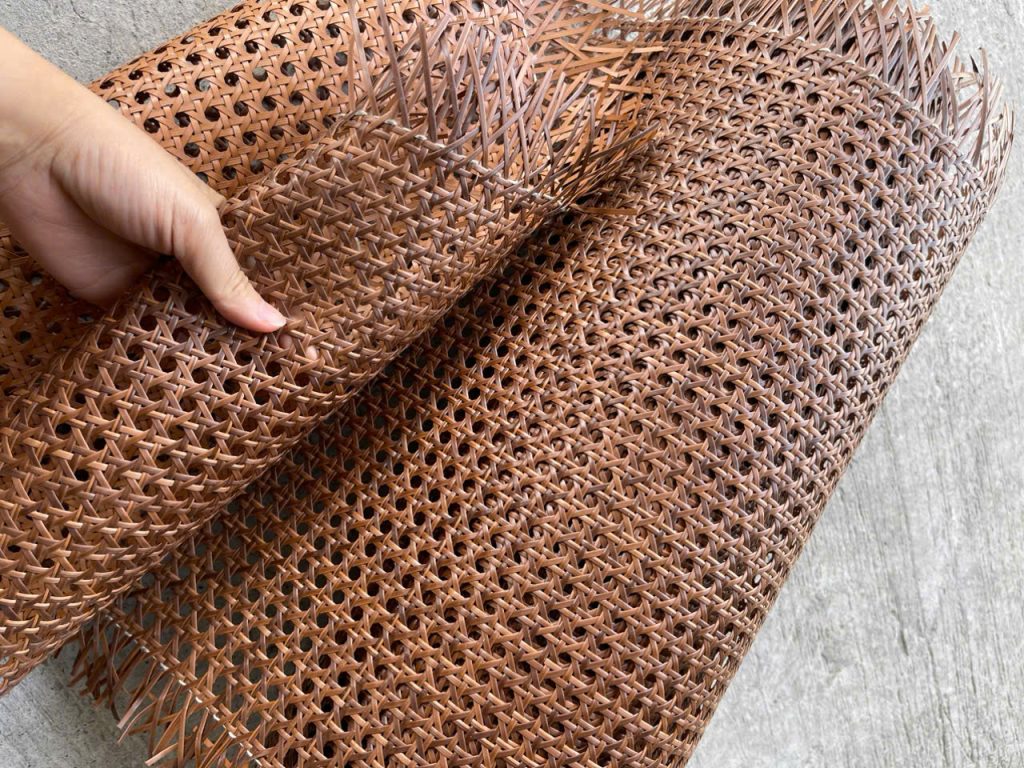
Natural rattan is celebrated for its flexibility and tensile strength, but like all organic fibers, it is subject to the laws of physics. Over time, constant pressure—whether from a person leaning against a chair back or the weight of items in a cabinet—can cause natural webbing to stretch or “sag.” Cane backing webbing acts as a reinforcement layer that absorbs the primary stress, allowing the decorative outer layer to maintain its perfect, drum-tight appearance.
By applying a secondary layer of backing material, designers can utilize delicate, high-transparency weaves (like the 1/2 inch radio weave) in applications that would otherwise be too fragile. This dual-layer approach is a hallmark of the furniture found in luxury environments like Royal Island Golf & Villa, where the goal is to achieve an airy, lightweight look without sacrificing the robustness required for a commercial-grade setting.
Material Varieties for Reinforced Cane Webbing
Not all backing materials are created equal. Depending on the specific requirements of the furniture piece, different types of cane backing webbing may be specified.
Secondary Rattan Mesh Backing
The most premium option involves using a secondary layer of industrial-grade rattan mesh. This mesh is often tighter and thicker than the decorative front layer. Because both layers are made from the same natural fiber, they expand and contract at the same rate when exposed to humidity changes. This synchronization is vital for international projects where furniture may be shipped from a tropical manufacturing hub to a dry, climate-controlled hotel in Europe or North America.
Synthetic and Hybrid Reinforcements
In some industrial applications, a synthetic mesh or a high-strength nylon backing is used. While less traditional, these materials offer extreme resistance to sagging. However, at Vilata, we emphasize the use of natural rattan reinforcements for our B2B clients who are committed to ESG (Environmental, Social, and Governance) goals. Using a 100% natural backing ensures that the entire piece remains eco-friendly and biodegradable, matching the sustainability standards often required for green-certified projects like Namia River Retreat.
Improving Structural Longevity in Large-Scale Hospitality Projects
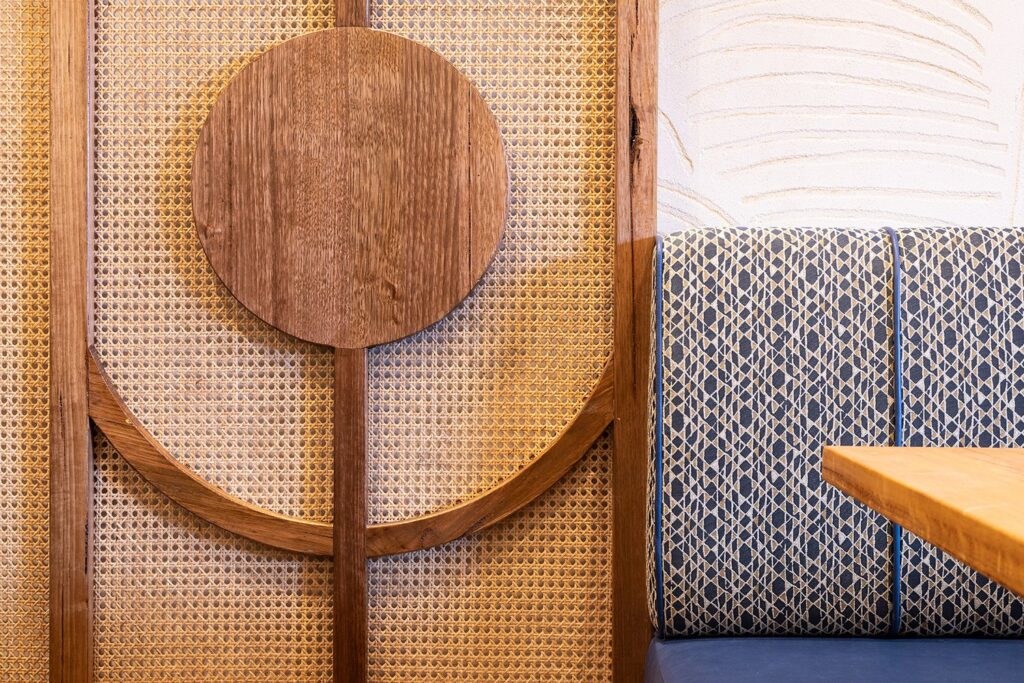
For a global hotel chain like the Marriott, the “Total Cost of Ownership” of furniture includes maintenance and replacement costs. Furniture that sags within its first year of service is a failure of engineering. Cane backing webbing prevents this failure by providing a “tension-catch” system.
When the primary rattan layer is pushed, the backing layer provides an immediate counter-tension. This is especially important for oversized wardrobe doors or expansive wall panels where the surface area is large. Without backing, these large panels can become loose over time due to gravity alone. By integrating a 1.2mm or 1.5mm backing layer, manufacturers can guarantee their clients a product that maintains its architectural “crispness” for years, even in high-humidity coastal resorts.
Quality Control Standards for Export-Grade Cane Backing Webbing Materials
At Vilata, we apply the same rigorous inspection process to our backing materials as we do to our primary decorative rolls. We understand that a flaw in the backing can be just as detrimental as a flaw in the front-facing panel. Our post-arrival QC protocols include:
- Tensile Strength Testing: Ensuring the backing material can handle the high-tension requirements of industrial stapling and splining.
- Dimensional Consistency: Verifying that backing rolls match the widths of our primary stock (45cm to 90cm) to allow for seamless layered installation.
- Batch Uniformity: While backing is often hidden, consistent thickness (gauge) is required to ensure the final composite panel has a uniform depth across the entire production run.
- Documentation: Every shipment is accompanied by a Certificate of Quality (CQ) and Certificate of Origin (CO), providing B2B buyers with the legal and technical assurance needed for international trade.
Professional Installation Techniques for Layered Rattan Panels

The successful application of cane backing webbing requires a specific manufacturing sequence. Unlike a single-layer installation, a reinforced panel must be handled with an understanding of composite tension.
- Hydration of Both Layers: Both the decorative rattan and the backing webbing should be hydrated in lukewarm water. This ensures they reach their maximum expansion simultaneously.
- Sequential Fastening: The backing layer is typically fastened to the frame first, slightly tighter than the front layer.
- The Sandwiched Finish: The decorative layer is then applied over the backing. As they dry together, they create a unified, high-strength panel.
This technical process is what allows the furniture in the Royal Island Golf & Villa to maintain its pristine condition despite the environmental stressors of a golf resort environment. At Vilata, we provide technical support to help our clients’ production teams master these layered installation techniques.
Why B2B Manufacturers Choose Vilata for Reinforcement Solutions
Sourcing backing material from the same supplier as your primary webbing is a strategic advantage. It ensures that the fibers are of the same botanical origin and have been processed under the same quality standards.
- Optimized Yield: We provide backing in the same 45-90cm widths as our main inventory, allowing for perfectly matched cutting lists and minimal waste.
- Project Proven Performance: Our materials have been battle-tested in world-class hotels. We know how rattan behaves in the Marriott or a private villa, and we share that expertise with our partners.
- Sustainability Compliance: By providing CO and CQ documentation, we help furniture brands prove their commitment to natural, responsibly sourced materials to their end-clients.
Conclusion: Securing the Future of Natural Design
The use of cane backing webbing is the hallmark of a manufacturer who understands the long-term realities of natural material behavior. By investing in high-quality reinforcement, furniture brands can deliver the ethereal beauty of rattan with the structural confidence of industrial engineering. Whether you are developing a boutique collection for Namia River or furnishing a global landmark, Vilata’s range of backing solutions provides the hidden strength your designs deserve. We remain the preferred partner for B2B professionals who refuse to compromise on either style or durability.