In the sophisticated world of high-end furniture manufacturing and sustainable architectural design, rattan webbing stands as a premier material that bridges the gap between organic tradition and modern luxury. For B2B buyers, procurement officers, and interior architects, understanding the intricate details of rattan webbing dimensions is far more than a logistical necessity; it is a critical factor in ensuring structural integrity, cost-efficiency, and the successful execution of large-scale projects. When specifying materials for iconic developments like the Marriott or the Namia River Retreat, precision in measurement becomes the foundation of excellence.
The Strategic Role of Dimensional Precision in Modern Cabinetry
Natural materials carry inherent biological constraints that synthetic alternatives do not. Rattan is harvested from the Calamus rotang vine, and its physical dimensions are dictated by the growth of the plant itself. In a commercial context, failing to account for these dimensions during the design phase can lead to significant material waste and increased production costs. Designers must move beyond the visual appeal of the weave and analyze how the width and thickness of the material interact with the frame. A professional understanding of these measurements ensures that every panel is taut, every joint is secure, and every project remains within budget.
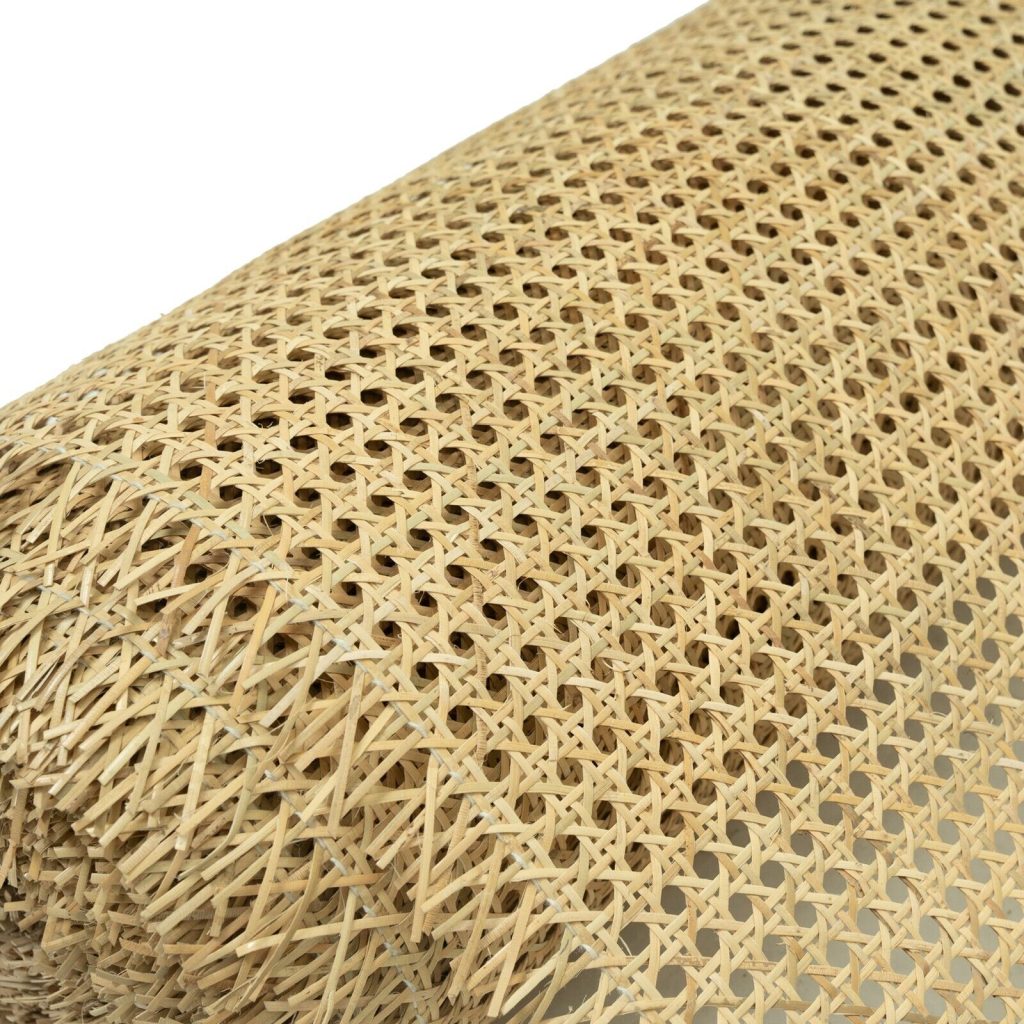
Comprehensive Analysis of Standard Widths from 45cm to 90cm
Vilata provides a specialized range of widths tailored to the global furniture industry, including 45cm, 50cm, 60cm, 70cm, 80cm, and 90cm. Each of these widths serves a specific purpose in the manufacturing ecosystem, allowing for a “no-waste” approach to production.
The Utility of 45cm and 50cm Widths
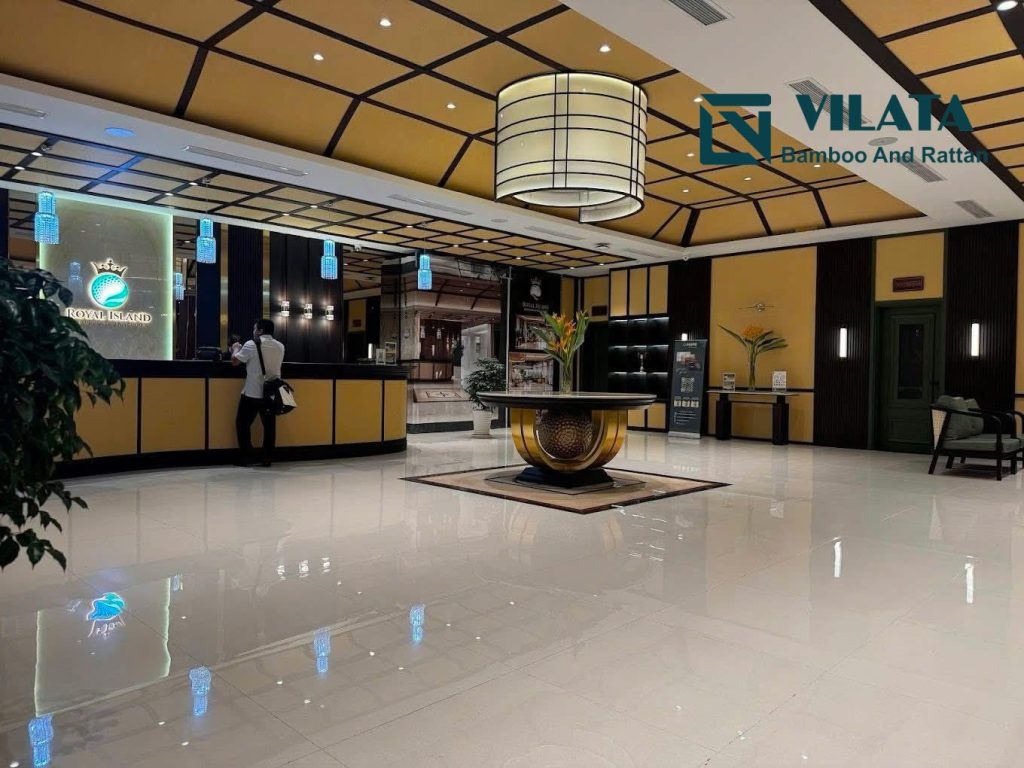
These narrower dimensions are the industry staples for seating and small-scale cabinetry. The 45cm width is engineered specifically for standard dining chair seats, providing just enough material for secure fastening without excess scrap. The 50cm width is frequently specified for drawer fronts and delicate bedside table inserts. In projects like the Royal Island Golf & Villa, these sizes are often used to create repetitive, high-quality accents across hundreds of guest rooms, where even a few centimeters of saved material per unit can lead to thousands of dollars in cost savings.
Versatility of the 60cm and 70cm Mid-Range
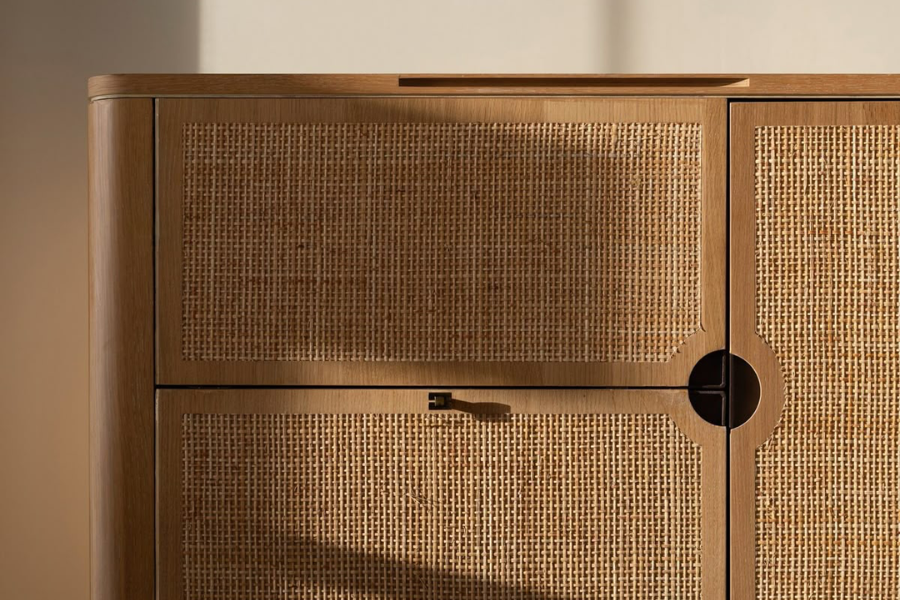
The 60cm and 70cm widths represent the most versatile segment of our inventory. These sizes align with the standard dimensions of residential sideboards and hospitality credenzas. A 60cm roll provides ample coverage for a standard cabinet door, allowing the weave pattern to remain centered and symmetrical. The 70cm width is a favorite among boutique furniture designers who require extra material for deep-inset panels or wrap-around applications where the rattan must cover the edges of a wooden frame.
High-Impact Architectural Widths: 80cm and 90cm
As the width of the webbing increases, so does the rarity and technical value of the material. Our 80cm and 90cm widths are reserved for high-impact architectural features. These are the dimensions required for full-height wardrobe doors, room partitions, and expansive wall cladding. Utilizing a 90cm wide sheet allows architects to cover large surface areas without visible horizontal or vertical seams, creating a seamless “wall of texture” that is a hallmark of tropical modernism.

Understanding Thickness and Gauge for Structural Longevity
While length and width are the primary focus of procurement, the thickness of the rattan strand—the gauge—is what determines the material’s lifespan under daily use. Standard premium webbing typically ranges between 1.2mm and 1.5mm in thickness.
For decorative applications such as cabinet inserts or ceiling panels, a 1.2mm thickness offers a refined, lightweight aesthetic that does not add unnecessary weight to the furniture doors. However, for load-bearing surfaces like chair seats or backrests in high-traffic environments like a hotel lobby, a 1.5mm thickness is non-negotiable. This extra gauge provides the tensile strength necessary to resist sagging and stretching over years of constant use. At Vilata, our Certificate of Quality (CQ) verifies that our strands meet these exact thickness specifications, ensuring that the material performs as well as it looks.
Calculating the All-Important Wastage Factor and Yield Optimization
For B2B manufacturing, the net area of a panel is never the same as the gross area of the material required. Professional designers must calculate a “Groove Allowance.” If the design utilizes a traditional spline-and-groove attachment method, an additional 3cm to 5cm must be added to every side of the frame dimension.
Yield optimization is the process of mathematically mapping your cutting list onto our standard roll widths. For example, if your project requires 40cm wide panels, purchasing a 90cm roll allows for a “two-up” cutting strategy with minimal waste, whereas a 50cm roll would leave a 10cm unusable strip. By choosing the correct width from our 45-90cm range, manufacturers can achieve a material yield of over 95%, a significant advantage in competitive bidding for large hospitality contracts.
The Science of Hydration and Dimensional Stability
Rattan is a hygroscopic material, meaning it absorbs and releases moisture based on its environment. This characteristic directly affects its dimensions. To ensure a professional, drum-tight finish, the material must be hydrated before installation. Soaking the rattan in lukewarm water for approximately 15 to 30 minutes causes the fibers to expand.
Once the webbing is stapled or splined into the frame while damp, it begins to dry and contract. This natural shrinkage is what creates the high-tension surface required for premium furniture. If the material is installed dry, it will eventually sag when the humidity in the room increases. This technical nuance is why Vilata emphasizes rigorous post-arrival quality checks, ensuring that the moisture content of our stock is maintained at an optimal 12-15% before it ever leaves our warehouse for international shipping.
Quality Control Protocols and Export Compliance
A key reason why Vilata has been chosen for prestigious projects like the Marriott is our uncompromising approach to Quality Control. We understand that for B2B clients, a single defective roll can halt an entire production line. Our inspection process is multifaceted:
- Color Grading and Symmetry: We ensure that each roll has a consistent tone, vital for projects where multiple pieces of furniture will be placed in the same room.
- Fiber Integrity: We manually inspect the weave for broken strands or knots that could create weak points or aesthetic flaws.
- Quantity and Dimension Verification: Every order is double-checked against the packing list to ensure the widths and lengths are exactly as specified.
- Documentation: We provide full CO (Certificate of Origin) and CQ (Certificate of Quality) to facilitate smooth customs clearance and provide our clients with peace of mind regarding the authenticity and quality of the rattan.
Global Logistics and the B2B Supply Chain
Navigating the global supply chain requires more than just a good product; it requires a partner who understands the pressures of international project timelines. Vilata’s export infrastructure is designed to support furniture manufacturers worldwide. Our rolls are meticulously packaged in moisture-proof wrapping and reinforced tubes to prevent crushing or warping during sea freight. Whether we are shipping to a factory in North America or a resort construction site in Southeast Asia, our logistics team ensures that the rattan webbing dimensions ordered are exactly what arrive at your door.
Conclusion: Engineering Excellence with Natural Materials
The selection of rattan webbing dimensions is a sophisticated blend of art and engineering. By understanding the applications of different widths from 45cm to 90cm, and respecting the technical requirements of thickness and hydration, furniture manufacturers can create pieces that are both beautiful and enduring. Vilata remains committed to providing the specialized material and technical expertise necessary to bring the world’s most ambitious interior designs to life, one precisely measured roll at a time.