In the architectural and furniture design industry, the choice of material texture often defines the soul of a project. Types of cane webbing vary significantly not just in their aesthetic appeal, but in their technical performance, tensile strength, and suitability for specific environments. For high-end hospitality developments such as the Marriott or the immersive Namia River Retreat, selecting the correct weave pattern is a critical step in achieving a balance between cultural heritage and contemporary luxury. At Vilata, we categorize our rattan materials through a rigorous lens of quality and application, ensuring that our B2B partners receive the exact technical grade required for their world-class installations.
The Architectural Influence of Open Weave Rattan Patterns
Among the many types of cane webbing, the “Open Weave“—specifically the 1/2-inch Radio Weave—remains the most iconic. Characterized by its rhythmic octagonal holes, this pattern is favored for its visual transparency and airflow capabilities.
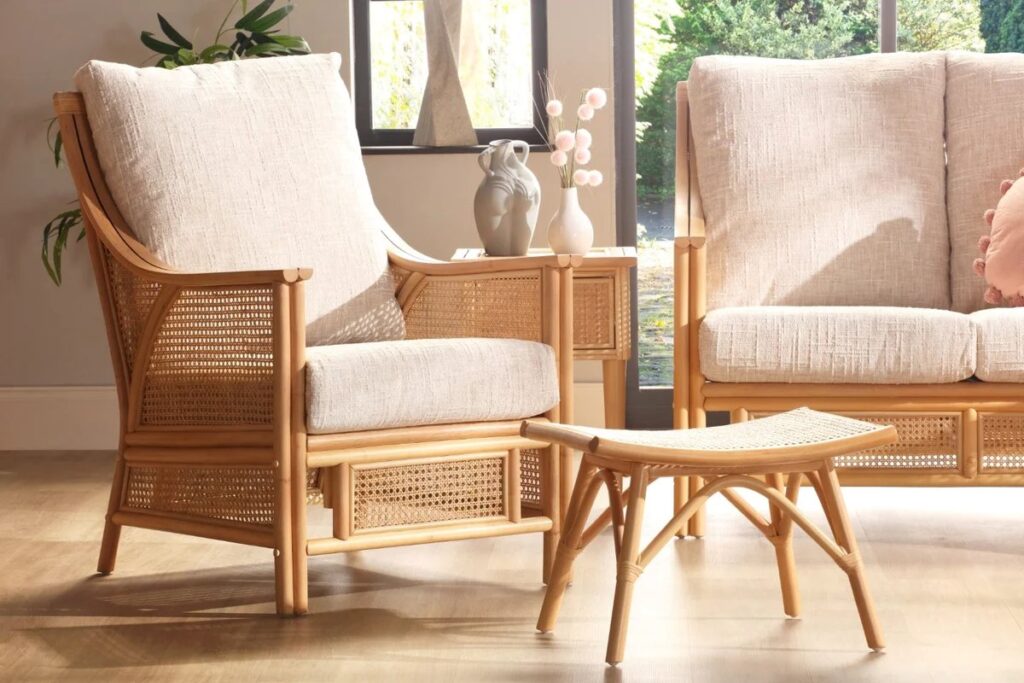
In projects like the Royal Island Golf & Villa, open weave rattan is frequently utilized for cabinetry doors and room dividers. The technical advantage of this pattern lies in its “breathability.” For tropical climates, it allows air to circulate through furniture, preventing the accumulation of moisture and protecting the integrity of the wood and the items stored within. From an aesthetic perspective, the open weave creates a sophisticated interplay of light and shadow, a signature element of tropical modernism that continues to dominate luxury resort design.
The Structural Integrity of Closed Weave and Fine Mesh Rattan
For applications where privacy or structural support is paramount, closed weave patterns offer a distinct set of benefits. Unlike the open weave, these types of cane webbing are woven tightly, leaving no gaps between the rattan strands.
Closed Weave (Solid Weave)
This variety is often used for high-traffic surfaces like table tops or headboards where a solid backing is required. Its technical strength is superior for load-bearing applications. In a commercial setting, a closed weave provides a robust surface that is easier to clean and maintain than its open-holed counterparts.
Fine Mesh and Box Weave
These are specialized variations that offer a more contemporary, geometric look. Fine mesh is often chosen for delicate furniture accents or small-scale inserts. Because the strands are narrower and the weave is tighter, it requires exceptional fiber consistency—a standard that Vilata guarantees through our Certificate of Quality (CQ).
Advanced Patterns: Herringbone and Diagonal Weaves
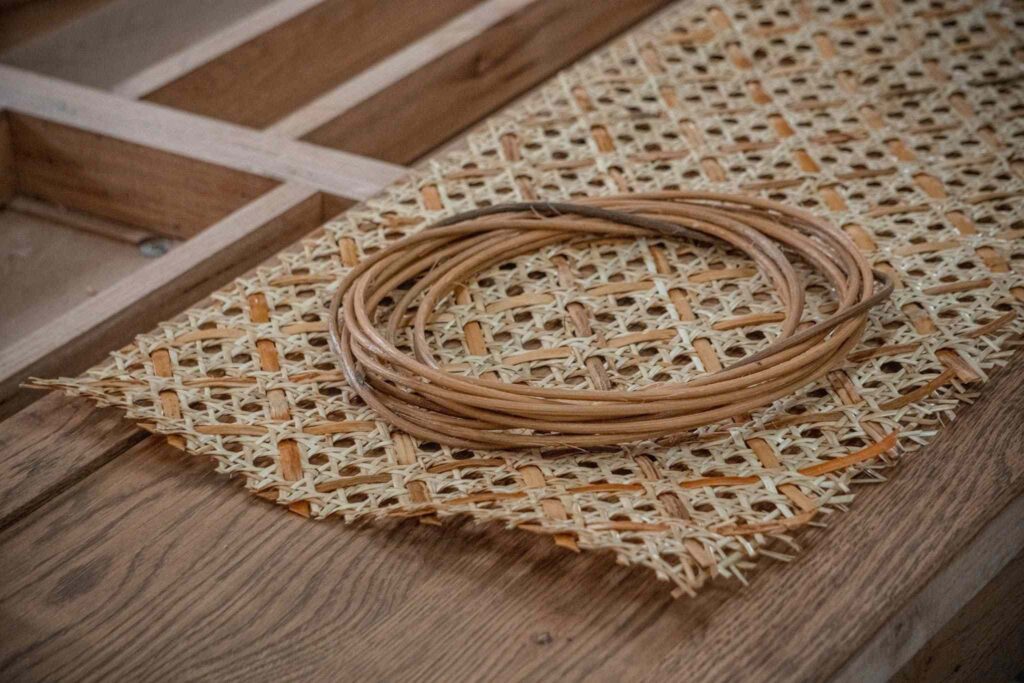
For designers seeking a departure from traditional patterns, diagonal and herringbone weaves provide a dynamic, directional aesthetic. These types of cane webbing are technically more complex to produce, as they require a high degree of skill to maintain the alignment of the strands across large surfaces.
The herringbone pattern, in particular, adds a sense of movement to furniture facades. It is often specified for focal pieces in boutique hotels, such as the statement furniture found in the Namia River Retreat. Because the diagonal alignment distributes tension differently than a standard cross-weave, these patterns must be handled with care during the installation process to prevent warping. Vilata’s QC team pays special attention to the “weave alignment” of these premium patterns, ensuring that the lines remain perfectly straight for a flawless architectural finish.
Material Composition: Bleached vs. Natural vs. Semi-Bleached
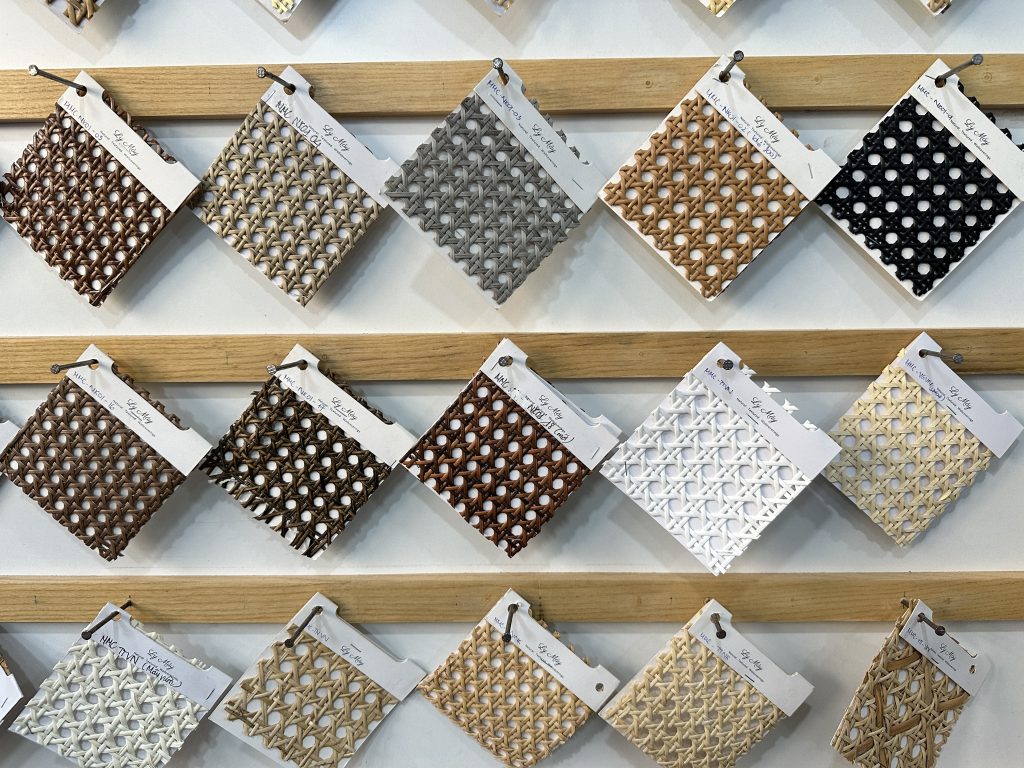
Understanding the types of cane webbing also requires an analysis of the material’s finish. The processing of the rattan skin determines its final color and how it will age over time.
Natural Cane Webbing
This is the most authentic form, retaining the original golden-yellow hue of the rattan vine. It is favored for “Indochine” or “Boho-chic” designs. In its natural state, the material develops a beautiful patina over time, which is highly valued in luxury residential projects.
Bleached Cane Webbing
For modern, minimalist, or Nordic-inspired interiors, bleached rattan provides a clean, creamy white aesthetic. The bleaching process must be handled carefully to ensure that the chemical treatment does not weaken the natural fibers. Vilata ensures that all bleached materials maintain their tensile strength, backed by our rigorous testing protocols.
Semi-Bleached and Tonal Sorting
Semi-bleached options provide a middle ground, offering a more uniform “off-white” look while retaining some of the natural fiber’s warmth. Regardless of the finish, Vilata’s internal sorting process groups rolls into “Master Batches” to ensure that large-scale orders for hotel chains like the Marriott maintain perfect color harmony across every room.
Quality Control and Technical Compliance in Material Sourcing
At Vilata, we believe that the diversity of types of cane webbing must be matched by a uniform standard of quality. Our post-arrival inspection is what allows us to serve the world’s most demanding B2B clients. Every roll, regardless of its pattern or color, is subjected to a strict verification process:
- Consistency of Strand Width: Ensuring that the strands used in an open weave are uniform to prevent an asymmetrical look.
- Surface Refinement: Manually checking for “burrs” or sharp fibers, which is essential for guest-facing furniture in resorts.
- Moisture Content Stabilization: Maintaining a range of 12-15% to ensure the material remains flexible for installation but stable for long-term use.
- Documentation: Providing full CO (Certificate of Origin) and CQ (Certificate of Quality) to facilitate international trade and verify the sustainability of the harvest.
Selecting the Right Pattern for Hospitality Environments

When specifying material for a project like the Royal Island Golf & Villa, the choice between different types of cane webbing often comes down to the intended “use-case.”
- For guest room wardrobes: Open weave is recommended for airflow.
- For restaurant seating: A heavy-duty closed weave or a reinforced open weave with a 1.5mm gauge is preferred for longevity.
- For feature walls: Herringbone or oversized diagonal weaves create the necessary “wow factor” for lobby environments.
Vilata’s technical consultants work directly with architects to map these patterns to their specific functional needs, ensuring that the material not only looks stunning upon installation but performs flawlessly under the rigors of commercial use.
Conclusion: A World of Texture and Technical Excellence
The various types of cane webbing represent a rich palette for the modern designer. By understanding the technical nuances of each pattern—from the breathable radio weave to the structurally sound closed weave—manufacturers can create furniture that truly stands out in the global market. With Vilata as your supply partner, you gain access to a curated selection of world-class rattan materials, all backed by the documentation, quality control, and project-proven experience required for excellence in the hospitality sector.