Rattan & Natural Fiber Materials in the Italy Furniture and Interior Market
Italy’s relationship with rattan materials is rooted in one of the most enduring intersections of craft tradition and design authority in the global furniture industry. As a country whose furniture makers have defined international standards of craftsmanship, material quality, and aesthetic refinement for generations, Italy approaches natural fiber materials Italy’s luxury furniture manufacturers, boutique interior designers, and global design exporters source with a precision and selectivity that reflects the country’s position as a design leader rather than a volume producer. Italian furniture materials — cane webbing panels, rattan core, woven mat surfaces, and grasscloth wallcoverings — are chosen for their contribution to the visual and tactile quality of finished pieces that carry Italy’s design identity into residential and hospitality interiors worldwide.
Natural Fiber Materials in Italy – A Luxury Craftsmanship Market
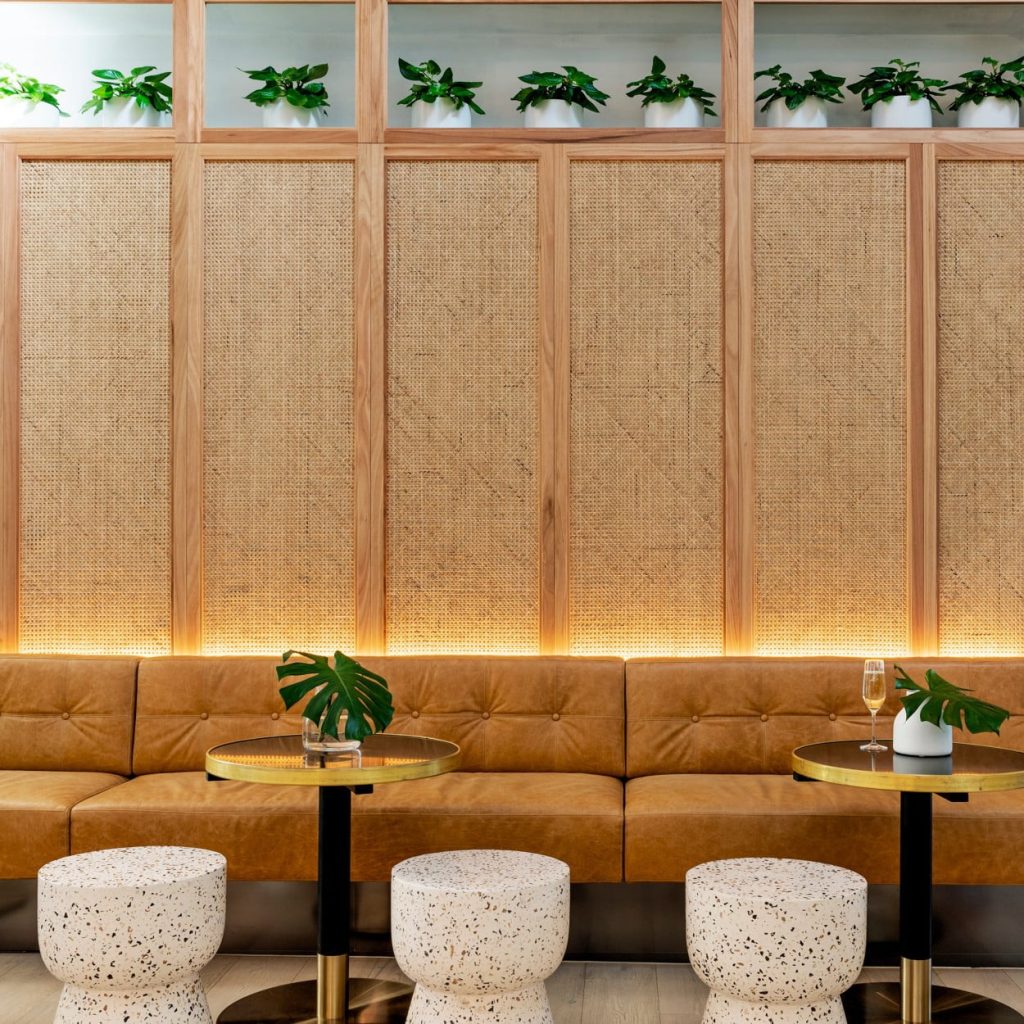
Italy occupies a singular position in the European and global furniture material landscape — one that is defined by craftsmanship excellence, aesthetic authority, and the influence of Italian design culture on premium interior markets worldwide. Rattan materials Italy’s furniture producers and interior architects source are evaluated against the country’s famously exacting standards for material quality and visual precision. The cane webbing Italy market is not driven by industrial volume or cost efficiency — it is driven by the demand of makers and designers who require woven natural surfaces that perform to the aesthetic standard of furniture collections destined for luxury residential showrooms, international design exhibitions, and high-specification contract interiors across Europe, North America, and the Middle East.
Core Industries Driving Rattan Materials Demand in Italy
Luxury Furniture Manufacturing
Luxury furniture Italy’s most celebrated production regions generate — Lombardy, Veneto, Tuscany, and Emilia-Romagna — represents the primary and most internationally visible demand channel for Italian furniture materials. High-end seating collections incorporating cane webbing back and seat panels, luxury cabinet ranges with woven door inserts, premium bedroom furniture systems with natural woven detail elements, and heritage-inspired collections that blend classic material references with contemporary silhouettes all require cane webbing Italy market suppliers source to the precise weave density, surface uniformity, and dimensional accuracy that luxury furniture production demands. Unlike Germany’s industrial precision approach or Poland’s volume production orientation, Italian furniture manufacturing is defined by aesthetic precision and hand-finished quality — making material surface character as important as dimensional specification.

Luxury furniture Italy’s most celebrated brands export design value as much as physical product to buyers across the United States, France, Germany, the United Kingdom, and the Middle East. The natural fiber materials Italy’s global design export industry incorporates — woven materials Italy’s most internationally recognised furniture collections specify as panel inserts, textural detail elements, and surface materials — carry the material authenticity and craft quality that premium international buyers associate with Italian design identity. For Italian manufacturers producing furniture collections that will be photographed, exhibited at Salone del Mobile, and sold through international retail partners, the consistent quality of natural woven material inputs is a product reputation issue as much as a production variable.
Boutique Hospitality & Luxury Interior Design
Italy’s boutique hospitality sector — concentrated in Milan, Rome, Florence, and Venice — generates design-led demand for rattan materials Italy’s luxury interior design community sources for headboard panels, lounge furniture, decorative partition elements, and feature wall applications in historic building conversion hotels, designer-driven boutique properties, and the luxury residential renovation projects that Italy’s affluent domestic and international client base commissions. Italian hospitality interiors are characterised by cultural storytelling, visual refinement, and the deliberate layering of natural materials within architectural contexts of historic significance — an environment where natural fiber materials Italy’s hospitality designers specify must contribute to a material composition of exceptional quality.
Residential Luxury Renovation
Italy’s residential luxury renovation market — covering the redesign of historic apartments in Milan and Rome, villa restorations in Tuscany and Umbria, and the high-specification residential projects that Italy’s interior design community commissions — generates consistent demand for Italian design materials that include cane webbing for wardrobe panel inserts, rattan core for artisan furniture finishing, and grasscloth wallcoverings for feature wall applications where natural surface texture adds material depth to premium interior schemes.
Natural Fiber Material Applications in Italian Design & Manufacturing
Italian furniture materials and natural woven surface products serve precise roles within Italy’s craftsmanship-led production and design environment:
Cane Webbing
- Designer chair back and seat panels — the primary cane webbing Italy market application in luxury furniture production, specified for collector chairs, designer seating collections, and premium dining furniture
- Luxury cabinet door inserts — incorporated as decorative panel material in high-end cabinetry, wardrobes, and storage furniture produced for international luxury residential markets
- Classic-modern furniture hybrid detailing — used by Italian furniture makers to introduce traditional woven material references into contemporary silhouettes that blend craft heritage with modern design
Rattan Core
- Hand-finished furniture binding — applied by Tuscan and Veneto artisan workshops for chair arm, leg, and frame finishing as structural and decorative detail on bespoke luxury pieces
- Edge finishing on export furniture — used in Italian furniture manufacturing for natural material edge treatment that contributes to the hand-finished quality perception of premium export collections
Rattan Mats
- Decorative furniture panel components — flat woven rattan integrated into luxury furniture designs as surface panels that combine with wood, marble, and metal in material compositions characteristic of Italian contemporary design
- Boutique hospitality wall accents — specified in Milan and Rome boutique hotel interior projects for natural material feature wall applications
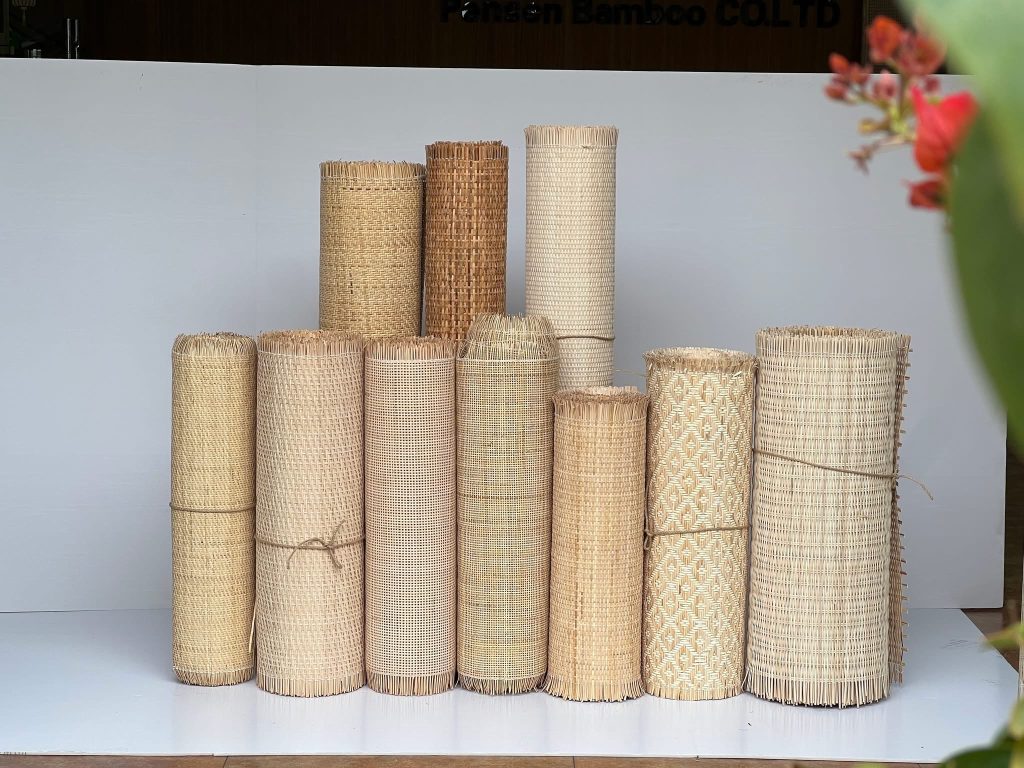
Grasscloth Wallpaper
- Designer apartment feature walls — specified by Milan and Florence interior designers for luxury residential projects where natural wall texture introduces organic warmth into otherwise refined, minimal interior schemes
- Boutique hotel interior surfaces — used in historic building conversion hospitality projects where natural fibre wallcovering is materially appropriate to the architectural character of the space
Italian Design Philosophy & Aesthetic Direction for Natural Materials
Italy’s design philosophy occupies a unique position in the global interior material landscape — one that integrates Renaissance material heritage, contemporary architectural minimalism, and an unwavering commitment to material authenticity that defines Italian design authority across furniture, product, and interior disciplines. Natural fiber materials Italy’s design community engages with are not adopted as trend materials or sustainability statements — they are specified because they carry the material honesty, tactile quality, and visual depth that Italian design culture has always valued as foundational qualities of premium objects and interiors.
Woven materials Italy’s furniture makers and interior architects incorporate work within a design language characterised by warm material layering, texture-driven spatial composition, and the balance between architectural precision and organic material warmth that Italian interiors consistently achieve. Italian design materials differ from German functional precision, French decorative elegance, and South Korean trend-driven innovation — Italy’s approach to natural woven surfaces is rooted in timeless craft values and the conviction that material quality is the irreducible foundation of design excellence. Italian furniture materials specified for collector chairs, luxury cabinetry, and boutique hospitality projects must satisfy aesthetic standards set by a design culture that has been defining international luxury interior standards for centuries.
Key Regional Clusters Across Italy
Milan — Global Design Capital
Milan is Italy’s global design capital and the international centre of gravity for furniture design innovation, showroom culture, and the annual Salone del Mobile — the world’s most influential furniture and interior design event. The city’s concentration of furniture design studios, interior architecture firms, and luxury brand showrooms generates Italy’s highest-specification demand for natural fiber materials that meet the aesthetic standards of collections presented at international design audiences.
Veneto — Export-Oriented Furniture Manufacturing
Veneto’s furniture manufacturing cluster — producing export-oriented luxury furniture for European and international markets — is one of Italy’s most productive furniture manufacturing Italy nodes — a cluster the global export industry depends on. The region’s manufacturers source Italian furniture materials including cane webbing panels and rattan core for hand-finishing applications on high-end collections destined for international luxury retail channels.
Tuscany — Artisan Craftsmanship
Tuscany’s concentration of artisan furniture workshops and bespoke luxury production facilities generates distinctive demand for natural fiber materials at the piece-quality standard of Italy’s finest handmade furniture tradition. Tuscan artisan makers source rattan core and cane webbing for hand-applied finishing on bespoke commissions where material quality is evaluated by clients with the most discerning aesthetic expectations in the Italian market.
Emilia-Romagna — Industrial & Artisan Hybrid
Emilia-Romagna’s hybrid industrial-artisan furniture manufacturing base — combining larger-scale production capabilities with the craft orientation of Italian manufacturing culture — generates demand for rattan materials Italy’s most productive furniture region sources across both production-line furniture programs and artisan workshop commissions.
Import & Material Supply Context for Natural Fiber Materials in Italy
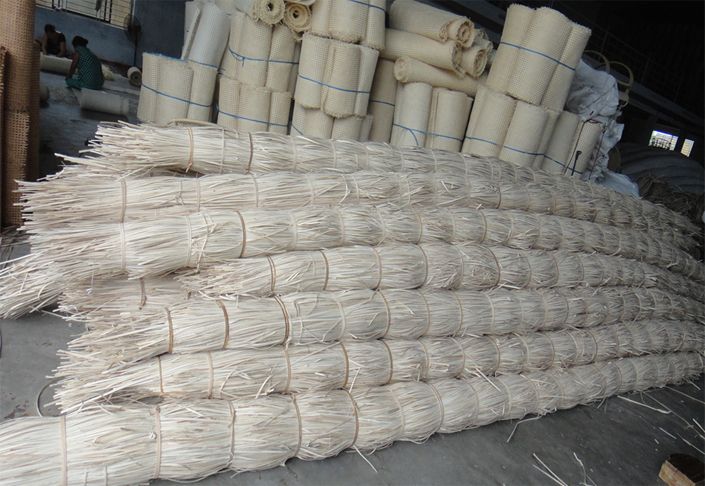
Italy imports natural fiber materials — rattan, cane, jute, sisal, and bamboo — to supply furniture manufacturing Italy’s luxury production sector and interior design sectors, as these materials are not domestically produced. The Italian market’s supply priorities differ fundamentally from industrial manufacturing markets: material visual quality, surface consistency, and the precision of weave density and dimensional accuracy take precedence over volume availability and per-unit cost.
For Italian furniture manufacturers producing collections for international luxury retail buyers, the natural woven material inputs incorporated into finished pieces must meet the visual quality threshold that Italian design identity demands — a single batch inconsistency in weave density or surface character is not acceptable in a product that will be exhibited at Salone or sold through international luxury furniture showrooms.
Sustainability & Material Responsibility in the Italian Market
Italy’s approach to sustainability in natural material sourcing is shaped by a combination of EU regulatory compliance, luxury brand responsibility commitments, and the growing influence of eco-conscious design values within Italy’s own design culture. Italian luxury furniture brands with international market presence are increasingly required to substantiate natural material sourcing credentials for EU and North American buyers whose sustainability procurement policies demand renewable material documentation.
Natural fiber materials Italy’s luxury furniture sector specifies — rattan, cane, bamboo, and grasscloth — carry genuine renewable credentials: plant-based, biodegradable, and produced without synthetic chemical content. For Italian design brands whose international positioning is built on material quality and authenticity, the traceability and sustainable sourcing of natural woven material inputs is becoming a brand value alignment issue as much as a compliance requirement.
Italy’s Strategic Role in the Global Furniture Ecosystem
Italy functions simultaneously as a design authority, a luxury production centre, and a global furniture exporter whose aesthetic influence shapes premium interior material specification across European, North American, and Middle Eastern markets. The natural fiber materials that rattan materials Italy’s furniture makers and designers incorporate into their work travel — through export collections, international showrooms, and the global influence of Italian design culture — into residential and hospitality interiors worldwide. For natural fiber material suppliers seeking to supply markets where material quality is evaluated at the highest international standard, Italy’s furniture and design community represents both a demanding qualification benchmark and a powerful endorsement channel.
For Italian buyers exploring consistent natural fiber material supply:
- Wholesale Rattan Cane Webbing — furniture-grade cane webbing for luxury chair, cabinet, and decorative panel production
- Wholesale Rattan Mats — flat woven panels for furniture component and boutique hospitality interior applications
- Wholesale Rattan Core — artisan-quality binding material for hand-finished luxury furniture production
- Wholesale Grasscloth Wallpaper — natural fiber wallcovering for luxury residential and boutique hospitality projects
Supporting Italy’s Premium Furniture & Design Industry
Italy’s demand for rattan materials — with rattan materials Italy’s craft tradition expressed through the aesthetic precision of its luxury furniture manufacturers, the craft authority of its artisan workshops, the design innovation of its Milan studios, and the global reach of its furniture export industry — represents one of the most quality-demanding and design-influential natural materials markets in the world. Natural fiber materials Italy’s furniture and design sectors specify must satisfy standards set by a country whose relationship with material craft and aesthetic excellence is foundational to its international identity.