Rattan & Natural Fiber Materials in the Singapore Market
Singapore occupies a distinctive position in the natural fibre materials market — a city-state with zero domestic production of rattan, jute, sisal, or seagrass, a design culture operating at global luxury standard, and a density of hospitality and residential interior projects that generates consistent, specification-driven demand for natural woven materials in one of the world’s most compact urban environments.
Rattan materials Singapore’s interior design studios, F&B operators, and luxury residential developers source must perform precisely in tight spatial layouts, hold up in tropical climate conditions, and meet the refined aesthetic standards of a market where design quality is a primary commercial differentiator. This page explores how natural fibre materials fit Singapore’s urban interior landscape — the industries that drive demand, the applications that dominate specification, and the design context that shapes material choice across the city’s residential and commercial sectors.
Natural Fibre Materials in Singapore – An Urban Luxury Market
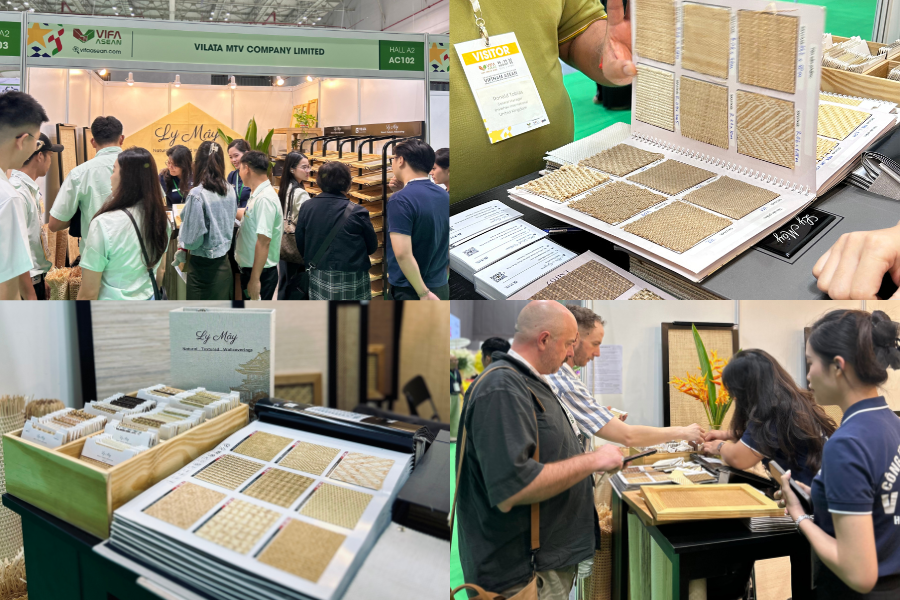
Singapore’s demand for rattan materials Singapore’s design and hospitality sectors source is shaped by a set of market characteristics that make it unlike any other in Southeast Asia or the wider Asia-Pacific region. As a city-state with 100% import reliance for natural fibre materials, a residential landscape defined by high-rise condominium living, and one of the most active hospitality and food-and-beverage scenes in the world, Singapore’s design market treats natural woven materials as precision instruments — chosen for their ability to introduce warmth, organic texture, and visual lightness into compact, glass-and-concrete urban environments where every material choice carries significant aesthetic weight.
Natural fibre materials Singapore’s interior designers, hospitality operators, and residential renovators specify are selected for their performance in space-constrained layouts, their compatibility with the tropical-modern and Japandi-influenced aesthetics that dominate the city’s interior design culture, and their alignment with Singapore’s growing commitment to urban green design.
Core Industries Driving Rattan Materials Demand in Singapore
Interior Design Studios
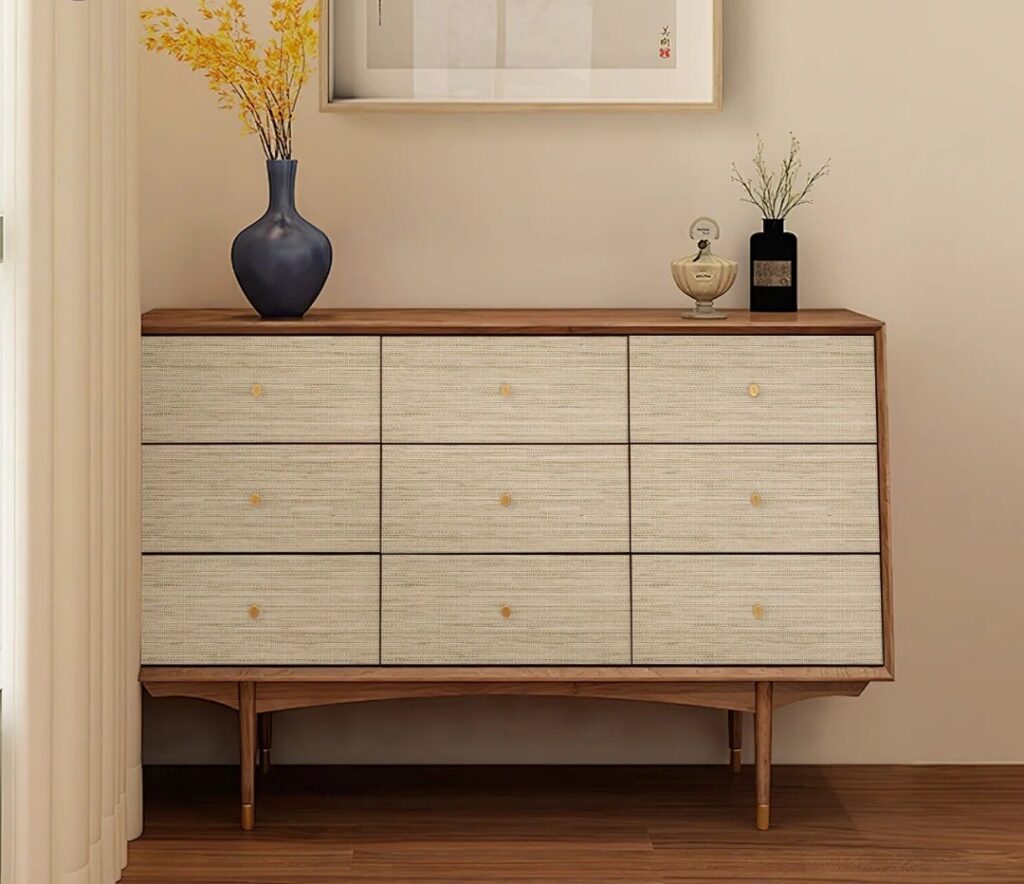
Singapore’s concentration of boutique interior design firms — working primarily on condominium renovation, penthouse fit-out, and compact luxury residential projects — is the primary professional demand channel for rattan materials Singapore’s design market generates. Interior designers working within Singapore’s characteristic constraints of limited floor area, strong natural light, and the glass-and-steel material palette of high-rise residential architecture actively specify natural fibre materials as warmth-introducing, space-visually-expanding design elements. Cane webbing cabinet inserts, wardrobe panel replacements, and rattan mat wall cladding are among the most common applications in condo interior natural materials specifications, precisely because they introduce organic texture without visual bulk — a critical consideration in compact layouts where material heaviness is a design liability.
Hospitality & F&B Industry
Singapore’s extraordinarily dense and design-competitive hospitality and food-and-beverage sector generates consistent demand for hospitality interior materials Singapore’s specification market produces at a level disproportionate to the city’s physical scale. Boutique hotels, rooftop bars, trend-driven cafés, and luxury restaurant interiors compete intensely on design differentiation, and hospitality interior materials Singapore’s specification market favours — cane-backed seating, decorative ceiling panels, and cane webbing feature walls — are frequently specified to create organic warmth and visual texture that distinguishes hospitality spaces from the hard-surface commercial interiors that surround them. The F&B sector’s rapid project turnover also means that natural fibre materials are specified on tight schedules, with consistency and supply reliability as premium requirements.
High-End Residential Developments
Singapore’s luxury condominium and penthouse renovation market — concentrated in Districts 9, 10, and 11, and increasingly in the Sentosa Cove and East Coast corridors — generates demand for rattan furniture material Singapore’s high-end residential interior designers source to introduce natural material warmth into interiors where glass curtain walls, polished concrete, and engineered stone would otherwise produce environments that are visually refined but materially cold. Cane webbing panels as cabinet door inserts, grasscloth wallpaper as feature wall materials, and rattan mat ceiling accents — all forms of rattan furniture material Singapore’s luxury residential market sources — are consistently specified in these projects as singular natural material interventions that anchor the warmth of an otherwise minimal scheme.
Retail & Commercial Interiors
Singapore’s retail landscape — concentrated across Orchard Road, Marina Bay, and the city’s cluster of design-forward shopping destinations — creates demand for natural woven materials as visual differentiation tools in commercial interior design. Concept stores and design-led retail spaces incorporate cane webbing Singapore market buyers source and rattan mat panels to create organic branding atmospheres that stand apart from the synthetic finishes that dominate mass-market retail environments. The signal value of natural material in Singapore’s premium retail context is well established — natural fibre reads as craft, quality, and considered design to the city’s sophisticated consumer base.
Natural Fibre Applications in Singapore’s Compact Urban Interiors
Rattan materials Singapore’s design and hospitality sectors specify serve precise roles in space-efficient and luxury-positioned interior applications:
Cane Webbing
- Cabinet door inserts — the dominant cane webbing Singapore market application in residential renovation, introducing natural texture into kitchen and wardrobe joinery without visual weight
- Wardrobe and storage panel insets — used to replace solid or glass panels with woven natural texture in compact bedroom and dressing area designs
- Dining chairs in condominium interiors — specified for their visual lightness and organic warmth in open-plan living spaces
Rattan Core
- Structural detailing on custom furniture — decorative binding applied to chairs, cabinets, and bespoke pieces by boutique furniture makers
- Binding for custom residential furniture — used by Singapore’s interior designers on bespoke commissioned pieces where natural material detail is a specification requirement
Rattan Mats
- Ceiling feature panels — flat woven rattan installed in F&B and hospitality ceilings to introduce acoustic softening and natural material warmth
- Decorative wall panels in hospitality interiors — used in restaurant, café, and boutique hotel feature walls as natural texture counterpoints to hard surface finishes
Grasscloth Wallpaper
- Accent walls in condominium apartments — the primary grasscloth wallpaper Singapore buyers specify, introducing organic surface texture, introducing organic surface texture into compact residential living rooms and bedrooms
- Restaurant and café feature surfaces — specified in F&B interiors to create visually warm, materially authentic environments that support premium positioning
Singapore Design Trends & Aesthetic Context for Natural Materials
The interior design movements driving demand for natural fibre materials Singapore’s residential and commercial markets generate reflect the city’s unique position at the intersection of Asian design culture, tropical environment, and global luxury influences. Japandi-inspired interiors — the fusion of Japanese minimalism and Scandinavian warmth that has become the dominant aesthetic in Singapore’s premium residential market — treat natural woven surfaces as essential material components: the organic warmth and visible craft of cane webbing and rattan furniture material Singapore’s design community specifies is precisely what Japandi requires to prevent minimal schemes from reading as cold or sterile.
Contemporary tropical design — Singapore’s most geographically indigenous aesthetic direction — draws on the visual language of Southeast Asia’s natural material tradition, incorporating rattan, woven panels, and natural fibre surfaces as cultural and environmental references within modern high-rise contexts. Urban minimal luxury, the defining mode of Singapore’s condominium interior market, uses condo interior natural materials as deliberate textural punctuation within otherwise hard-surfaced, pale-toned schemes. Across all of these directions, the common requirement is visual lightness combined with material warmth — rattan materials Singapore’s interior market specifies must introduce organic presence without competing with the spatial efficiency and visual clarity that compact urban interiors demand.

Singapore’s Design Market – Characteristics & Demand Structure
Singapore’s physical scale creates a market with distinctive characteristics that differentiate it from larger regional markets. Project timelines in Singapore’s interior design sector are compressed relative to comparable markets — condominium renovation cycles are measured in weeks rather than months, and F&B fit-outs operate on aggressive launch schedules that leave minimal margin for material supply delays or quality substitutions. This places a premium on supply consistency and documentation reliability that is proportionally higher than in markets with more flexible project timelines. The city’s premium specification standards also mean that surface quality, weave consistency, and finish accuracy are evaluated rigorously — Singapore’s design-literate interior community will identify and reject batch inconsistency that might be accepted in less specification-sensitive markets. Despite its small geographic footprint, Singapore also functions as a regional sourcing and distribution reference point for Southeast Asia, with material specifications and trends established in Singapore frequently influencing procurement decisions across the broader regional market.
Import & Supply Landscape for Natural Fibre Materials in Singapore
Singapore imports all natural fibre materials — rattan, cane, jute, sisal, seagrass, and bamboo are entirely absent from domestic production. The city’s position as a regional trade hub means that import logistics are well-developed, but Singapore’s own phytosanitary and customs requirements for natural plant-based materials are structured and consistently enforced. International suppliers shipping natural fibre materials — including cane webbing Singapore market buyers consistently require — must provide complete phytosanitary documentation, certificates of origin, and accurate HS code classification as standard — partial or incomplete documentation creates customs delays that are commercially unacceptable in a market where project schedules are tight and lead times are compressed. Singapore also serves as a distribution entry point for natural fibre materials flowing into Indonesia, Malaysia, and other regional markets, meaning that supply reliability has implications beyond the city-state itself.
Sustainability & Urban Green Design in Singapore

Singapore’s sustainability orientation is shaped by government policy and the city’s green building movement rather than consumer lifestyle culture — a distinction from Canada’s eco-residential demand and Australia’s eco-tourism sector. The Building and Construction Authority’s Green Mark certification scheme and the government’s broader urban sustainability commitments have embedded natural and renewable material specification into Singapore’s commercial building and interior design ecosystem. Natural fibre materials Singapore’s green-certified projects specify — including grasscloth wallpaper Singapore designers select for feature wall applications — rattan, bamboo, jute, and seagrass — carry renewable material credentials that align with Green Mark and similar urban sustainability frameworks. For commercial interior designers and hospitality operators working within green-certified building envelopes, natural woven materials offer both aesthetic performance and verifiable sustainability documentation.
Why Consistent International Supply Matters for Singapore Projects
For Singapore’s interior design studios, F&B operators, and luxury residential developers, the quality of international natural material supply is a project-critical concern. Rattan materials Singapore’s fast-paced interior market depends on must arrive on schedule, match approved samples in weave density and surface quality, and be accompanied by complete export documentation — requirements that are non-negotiable in a market where project timelines leave no room for material reordering or quality disputes. The city’s role as a regional distribution reference point also means that supply relationships established for Singapore projects often extend to broader regional sourcing programs.
For Singapore buyers exploring consistent natural fibre material supply:
- Wholesale Rattan Cane Webbing — furniture-grade cane webbing for condominium, F&B, and commercial interior applications
- Wholesale Grasscloth Wallpaper — commercial-grade natural fibre wallpaper for luxury residential and hospitality projects
- Wholesale Rattan Mats — flat woven panels for ceiling, wall, and interior accent applications
Supporting Singapore’s Interior & Hospitality Professionals
Singapore’s demand for natural fibre materials — driven by one of Asia’s most design-sophisticated urban markets, a hospitality sector that competes on interior quality at global standard, and a residential renovation culture that treats material selection as a premium design decision — represents a market where supply consistency, aesthetic accuracy, and documentation reliability are the primary criteria for international material partnerships. Natural fibre materials Singapore’s design professionals specify must perform to the standards of a market that accepts nothing less.